Monday - Friday 07:30 - 17:30, Saturday 07:30 - 16:00
Twickenham Floor Restoration With Lacquer Finish
Back to Portfolio
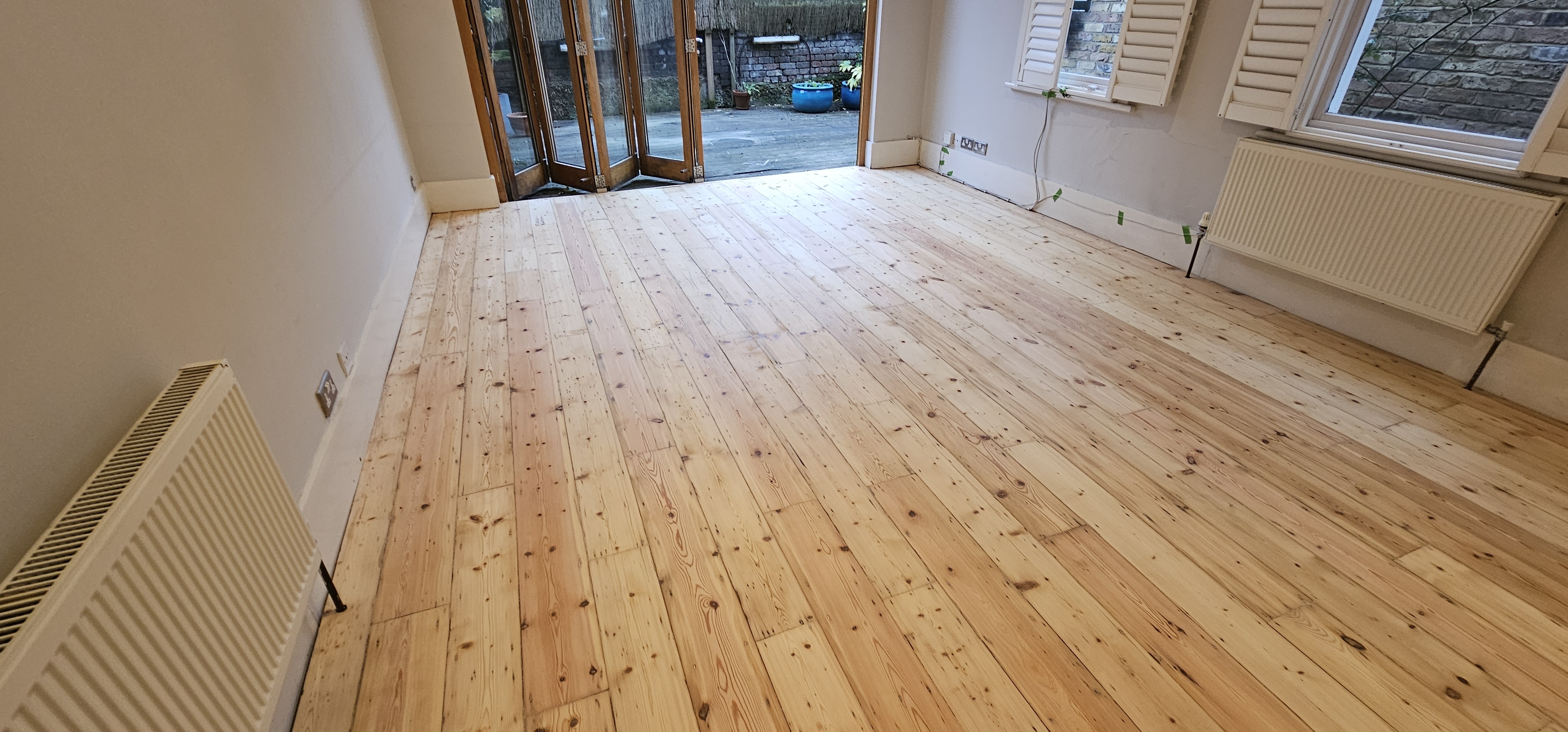
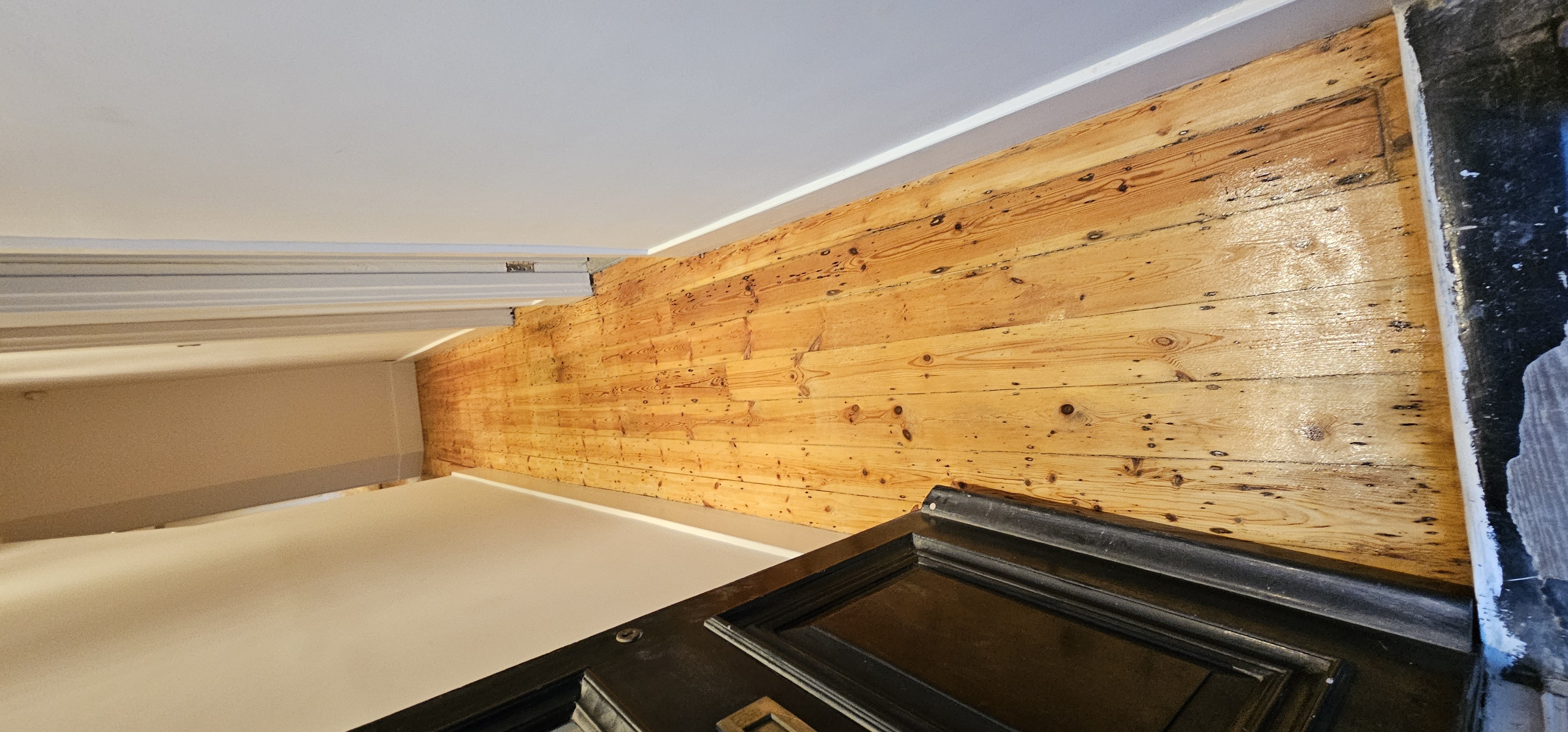
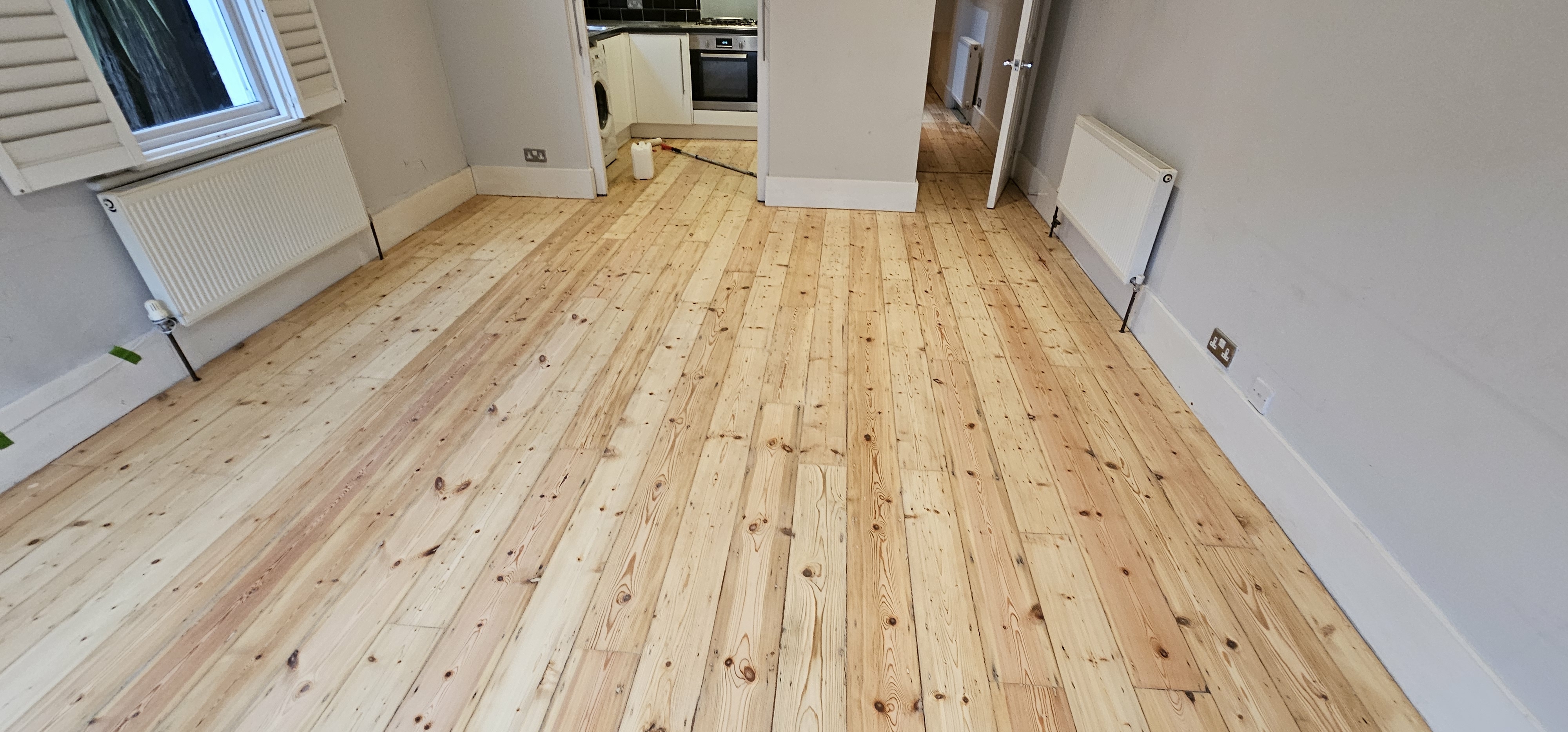
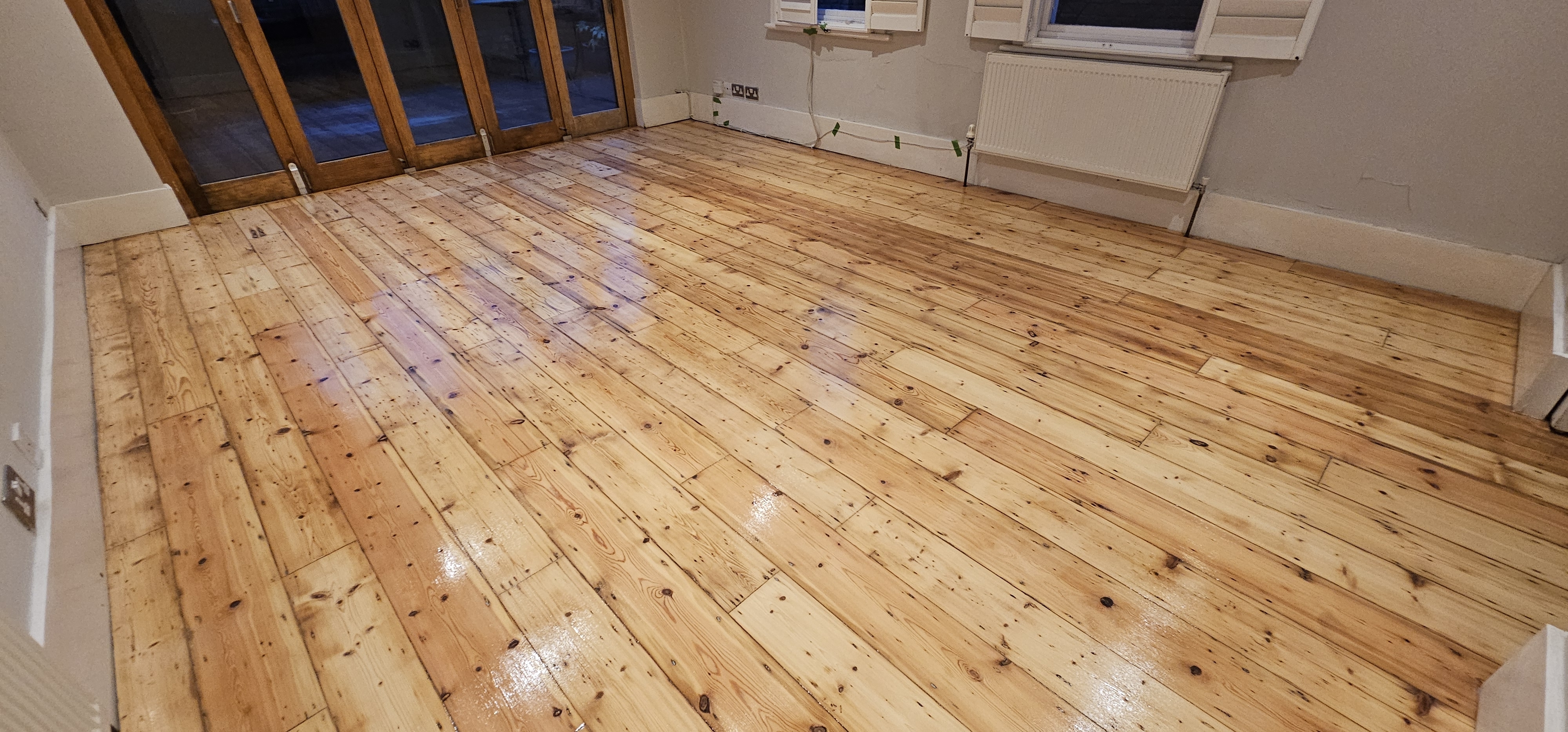
Twickenham Floor Restoration With Lacquer Finish
This Victorian property in Twickenham had solid oak floors hidden beneath decades of wear and old finishes. We stripped back the existing lacquer coating and sanded the boards to bare wood, then applied a fresh lacquer finish that restored the floor's natural grain and colour.
Work carried out
- Multi-stage sanding of solid oak flooring
- Dust extraction during the entire sanding process
- Filling of gaps and minor surface defects
- Application of two-pack lacquer finish
- Final light sanding between coats for adhesion
- Full floor inspection and quality check
About the project
The property owner had noticed the floor was becoming sticky in places and the lacquer was peeling near the skirting boards. The original finish, applied roughly twenty years earlier, had begun to fail as the wood underneath shifted and settled. Rather than patch repair the affected areas, we advised a complete sanding and refinishing. This approach meant the entire floor would have consistent colour and protection, rather than creating obvious repairs that would look patchy within a few years.
Our approach involved taking the floor back to raw wood across the entire room. We used progressively finer abrasive grades, starting at 40 grit and finishing at 120 grit, to create a smooth surface ready for coating. The sanding raised dust throughout the property, so we deployed our dust extraction equipment continuously. Once the floor was prepared and had settled for 24 hours, we applied the first coat of water-based lacquer, lightly abraded it, then applied the second coat. The result was a durable, clear finish that let the oak grain and natural colour show through without yellowing.
About our Twickenham floor restoration with lacquer finish service
Twickenham's housing stock is predominantly Victorian and Edwardian, which means many properties have solid timber floors as their original surfaces. These floors are built to last, but the finishes applied over the decades do wear down. We work regularly across Twickenham restoring floors in period properties where the boards are structurally sound but the protective coatings have failed. The local area also includes newer properties built from the 1970s onward, which often have engineered oak or hardwood veneers that still respond well to sanding and refinishing.
The typical floor types we encounter in Twickenham include solid oak, solid ash, engineered oak veneers, and occasionally softwood pine boards in older cottages. Each material requires slightly different sanding speeds and abrasive grades to avoid damage. Solid hardwoods can handle more aggressive sanding in the early stages, while engineered veneers need careful control to avoid cutting through the veneer layer. Lacquer finishes work well across all these floor types, offering protection that's easier to maintain than oil or wax. The clear lacquer allows the wood's natural character to remain visible, which appeals to most property owners in the area who want to preserve their floors' original appearance.
Frequently asked questions
What does floor sanding cost per square metre?
Sanding costs typically range from £25 to £45 per square metre, depending on the floor's condition, the type of wood, and the size of the area. Floors in poor condition with thick old finishes or damage take longer to sand, which increases costs. We provide a specific quote after inspecting the floor.
How long does sanding take?
A typical room of 30 to 50 square metres takes three to four days to sand and coat. This includes preparation, the multi-stage sanding process, gap filling, and two coats of lacquer with drying time. Larger floors or those with heavy contamination may require longer. We discuss the timeline during our site visit.
Is the sanding process dust-free?
We use industrial dust extraction equipment connected directly to our sanders, which captures roughly 95 per cent of dust during the sanding process. Some fine dust still travels through the air, so we seal doorways and run air purifiers in adjacent rooms. This approach is far cleaner than sanding without extraction, though it's not completely dust-free. Property owners should still plan to clean surfaces after the work is completed.
Project Gallery