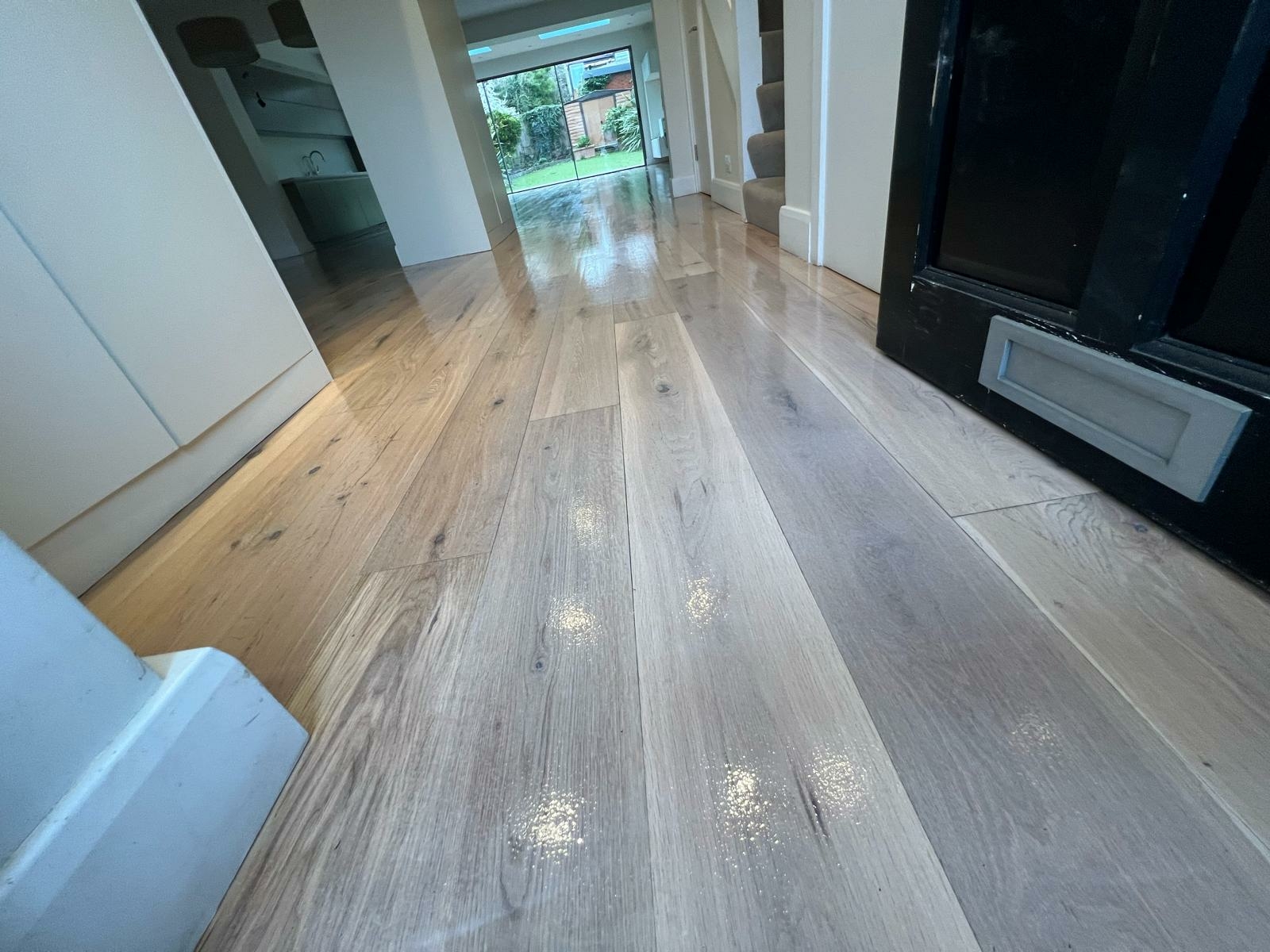
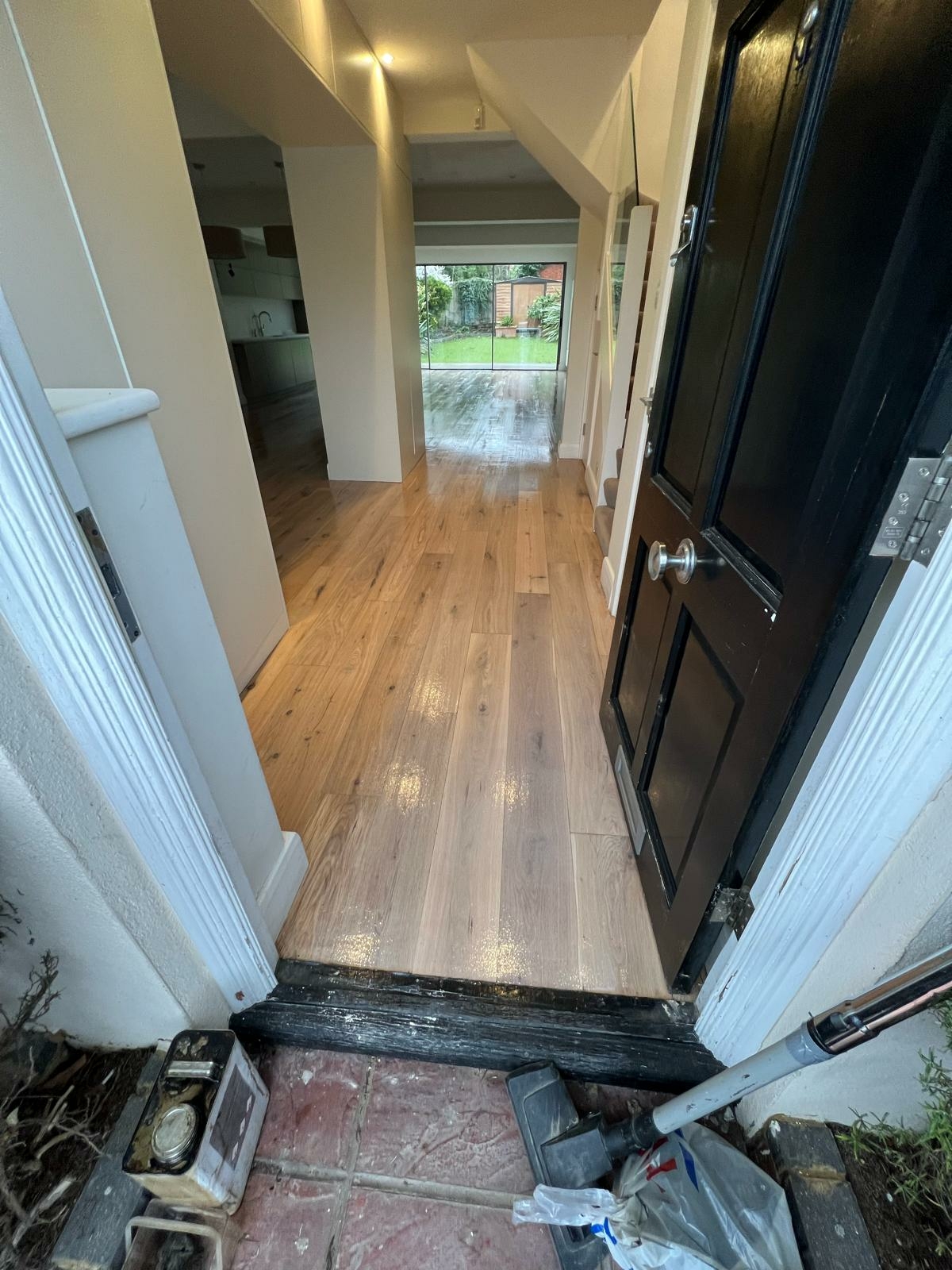
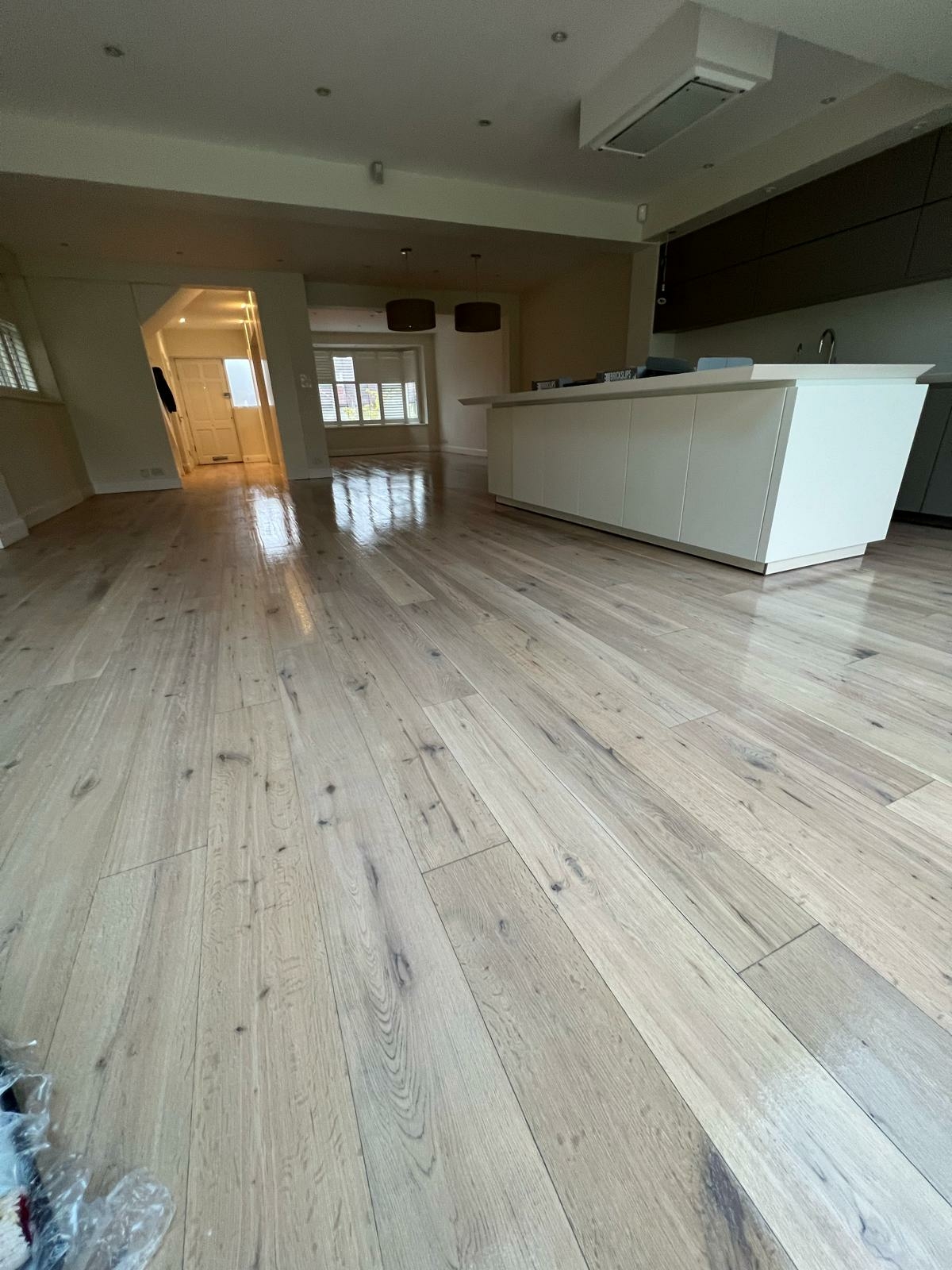
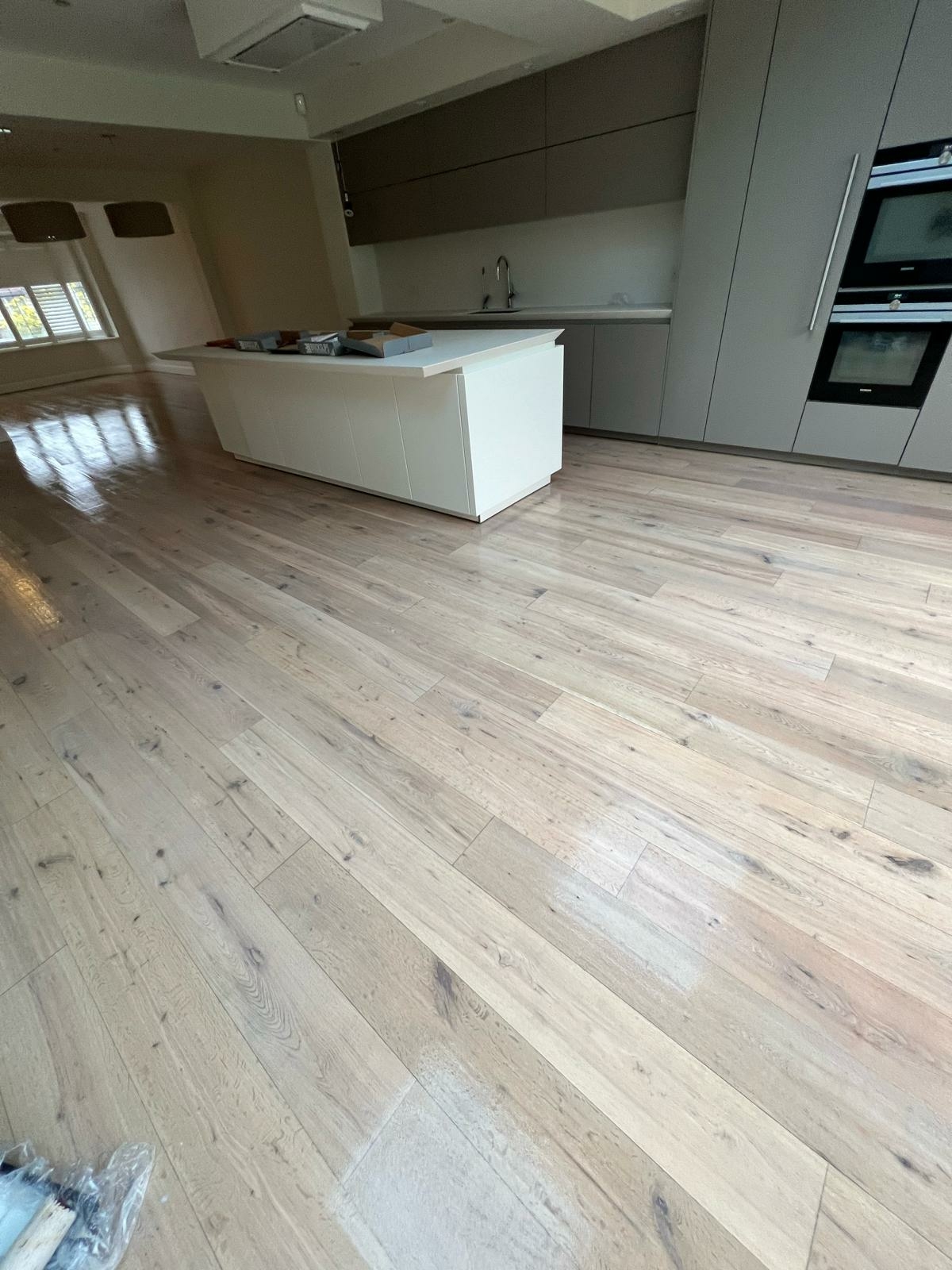
We recently completed a comprehensive floor sanding and lacquer finish project in Golders Green on a Victorian terraced property. The client wanted to restore their original wooden floors to their former appearance after years of wear and minor damage. We carried out full sanding across three rooms, removed the old finish, and applied a new protective lacquer coat.
Work carried out
- Floor preparation and assessment
- Dust containment setup across all rooms
- Machine sanding with 40, 80, and 120 grit belts
- Hand sanding of edges and corners
- Vacuum and tack cloth cleaning between stages
- Application of lacquer finish in two coats
- Final inspection and touch up work
About the project
This Victorian property had retained its original pine floorboards throughout the ground floor, though they had accumulated substantial surface wear and several dark stains over the decades. The client had attempted spot repairs in the past, which left the floor looking patchy and uneven. Our initial inspection revealed that while the boards were structurally sound, they needed comprehensive sanding to create a uniform appearance across all three interconnected rooms.
The main challenge was managing dust in a lived-in home without causing disruption to the client's daily routine. We installed temporary dust barriers between the work area and the rest of the property, and used our extractors throughout the sanding process. The rooms were south facing with plenty of natural light, which actually helped us identify areas that needed additional attention. We completed the work over five days, allowing proper drying time between the sanding stages and before the lacquer application. The client was able to move back into the rooms within 48 hours of the final coat.
About our Golders Green Wooden Floor Sanding And Lacquer Finish service
Golders Green has a strong mix of period properties and modern homes, and we work regularly across both. The Victorian and Edwardian terraces that dominate the residential streets often have original timber floors beneath layers of carpet or worn finishes. Many of these floors are pine or a mixture of softwoods, which respond well to sanding when they haven't been damaged beyond repair. We've also handled newer properties where owners want to refresh engineered wood or solid hardwood that's become dull or scratched. The area's tree lined streets and proximity to open spaces means properties tend to attract dust and grit, which can accelerate floor wear if not properly sealed.
Our approach in Golders Green always begins with a thorough assessment of what's actually there. Not all original floors are worth exposing, and we won't recommend sanding if the boards are too thin or damaged. We typically find that properties built between 1880 and 1920 have the best quality boards. For more recent properties, we're sanding engineered floors or dealing with water damage or pet-related staining. The lacquer finish we apply is flexible enough to handle the wood movement that occurs in older properties during seasonal temperature changes, and tough enough to withstand the foot traffic in family homes.
Frequently asked questions
How much does floor sanding cost per square metre?
Sanding costs typically fall between £25 and £45 per square metre, depending on the condition of the floor and what finish you want applied afterwards. Floors that are in reasonable condition and just need refreshing will be at the lower end. Floors with staining, dents, or previous repairs will cost more because they require additional attention. If you're having a protective lacquer applied after sanding, we usually discuss that as part of a single quote.
How long does the sanding process take?
A typical room of around 20 square metres takes roughly one to two days of sanding work, depending on how much preparation is needed and whether we're sanding around fitted furniture. After sanding, you need to allow 24 to 48 hours before the finish can be applied, then a further 48 hours before the floor is ready for normal use. We plan projects to minimise disruption, and we always discuss timing with clients before we start.
Is the sanding process dust free?
We use dust containment systems and powerful extraction equipment throughout the sanding process, which removes the vast majority of dust as it's created. However, "dust free" isn't entirely accurate, some fine particles will still be present. We set up temporary barriers to protect the rest of your home, use HEPA filtered extractors, and clean thoroughly between each sanding stage. Our aim is to keep disruption to a minimum while delivering a properly finished floor.