Monday - Friday 07:30 - 17:30, Saturday 07:30 - 16:00
Floor Sanding and Finishing in Barnet
Back to Portfolio
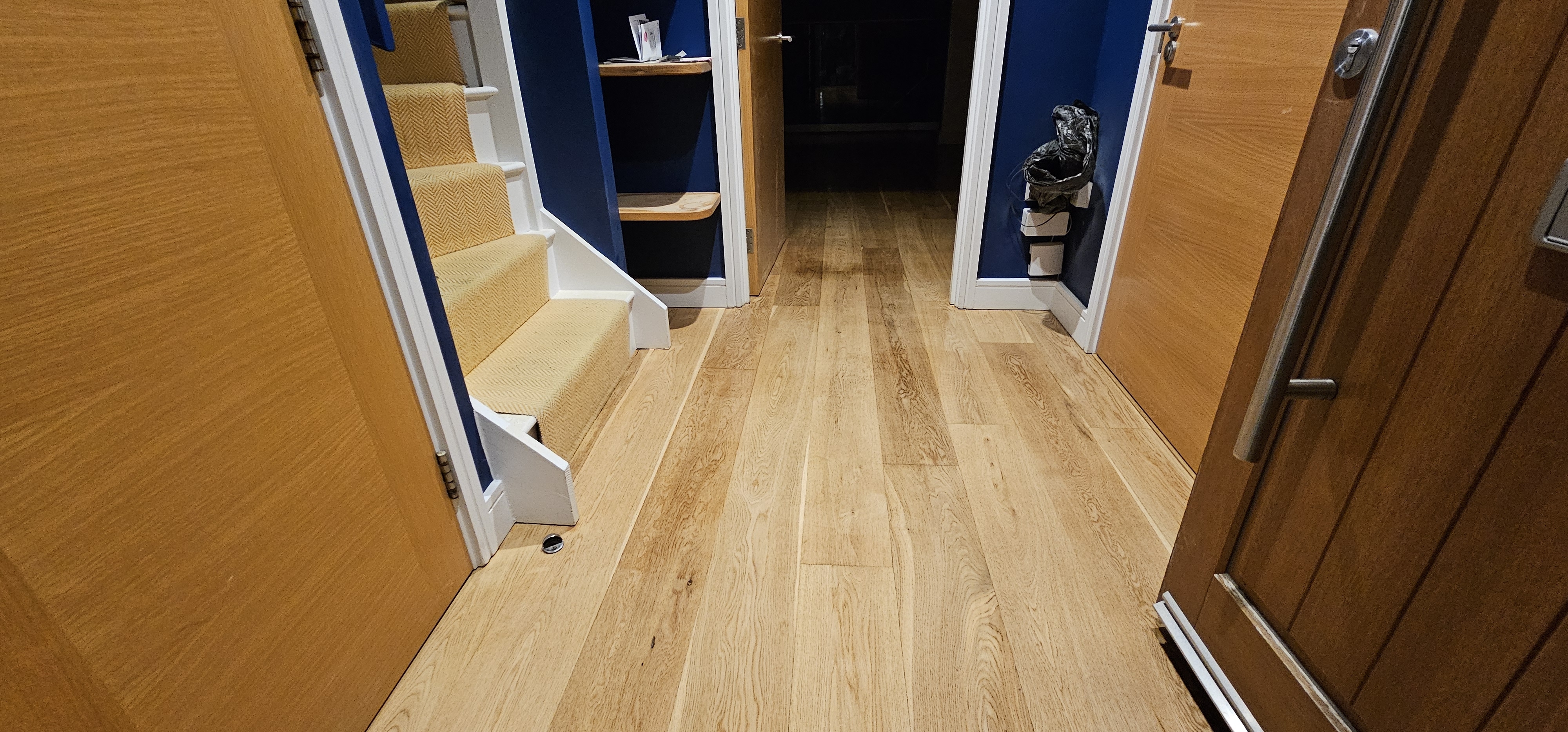
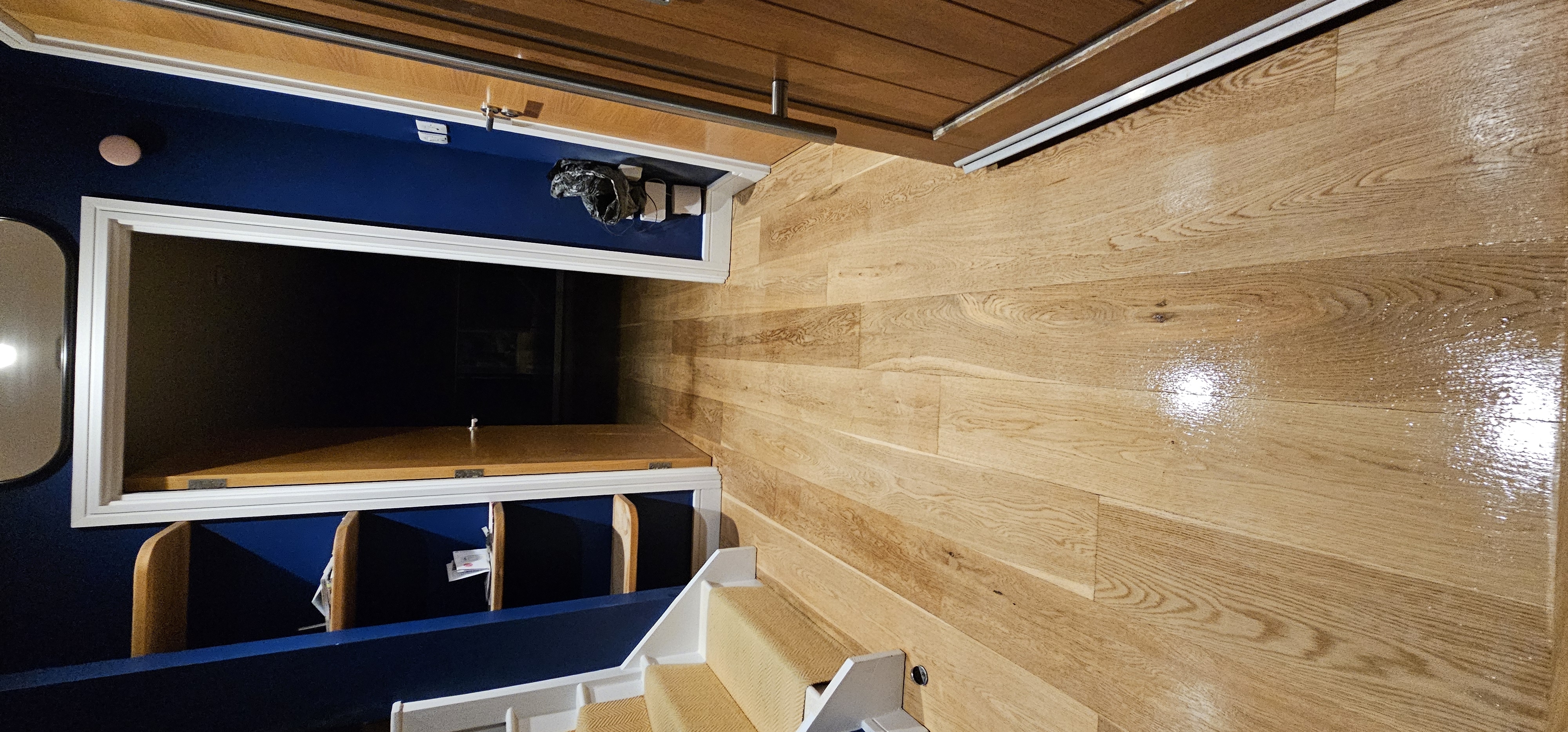
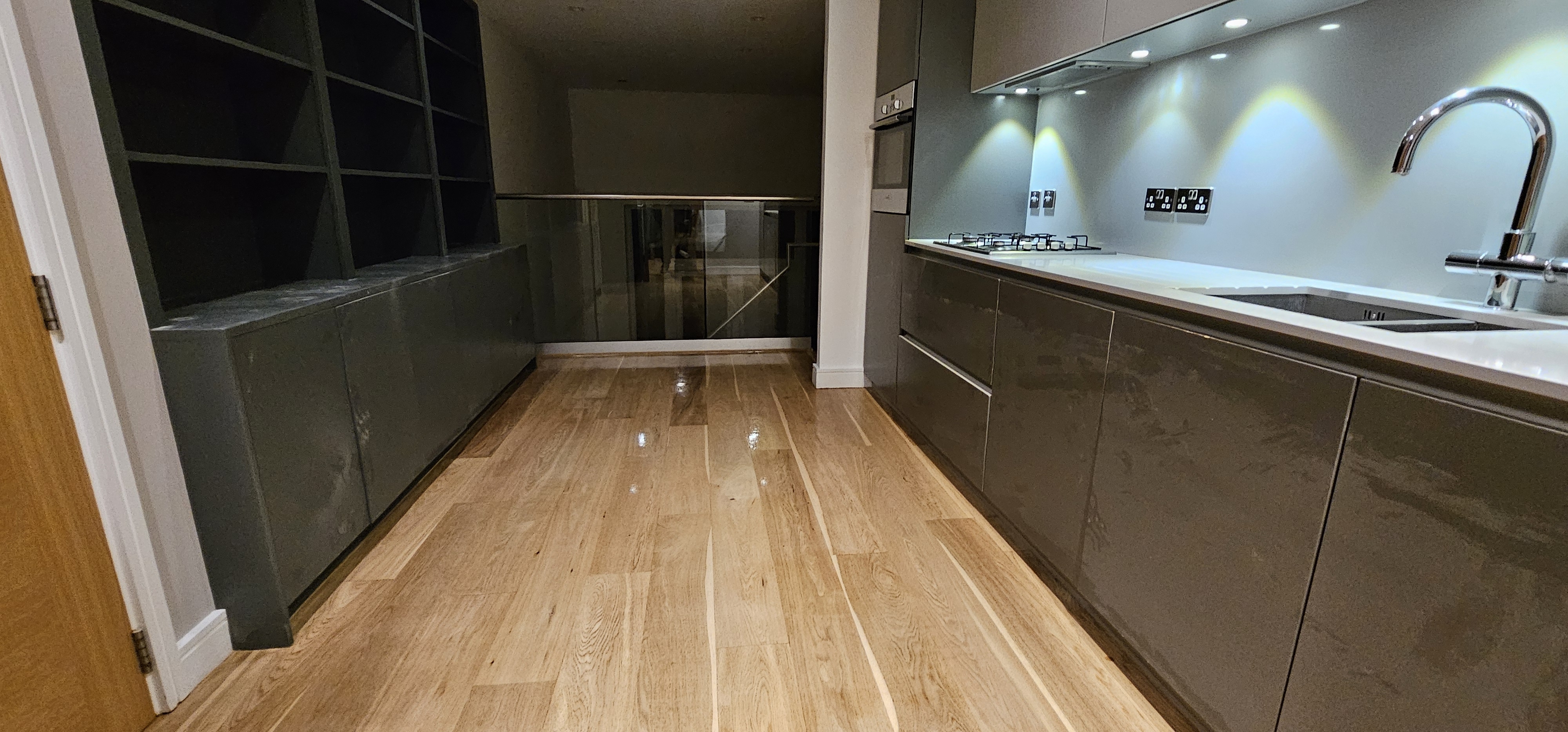
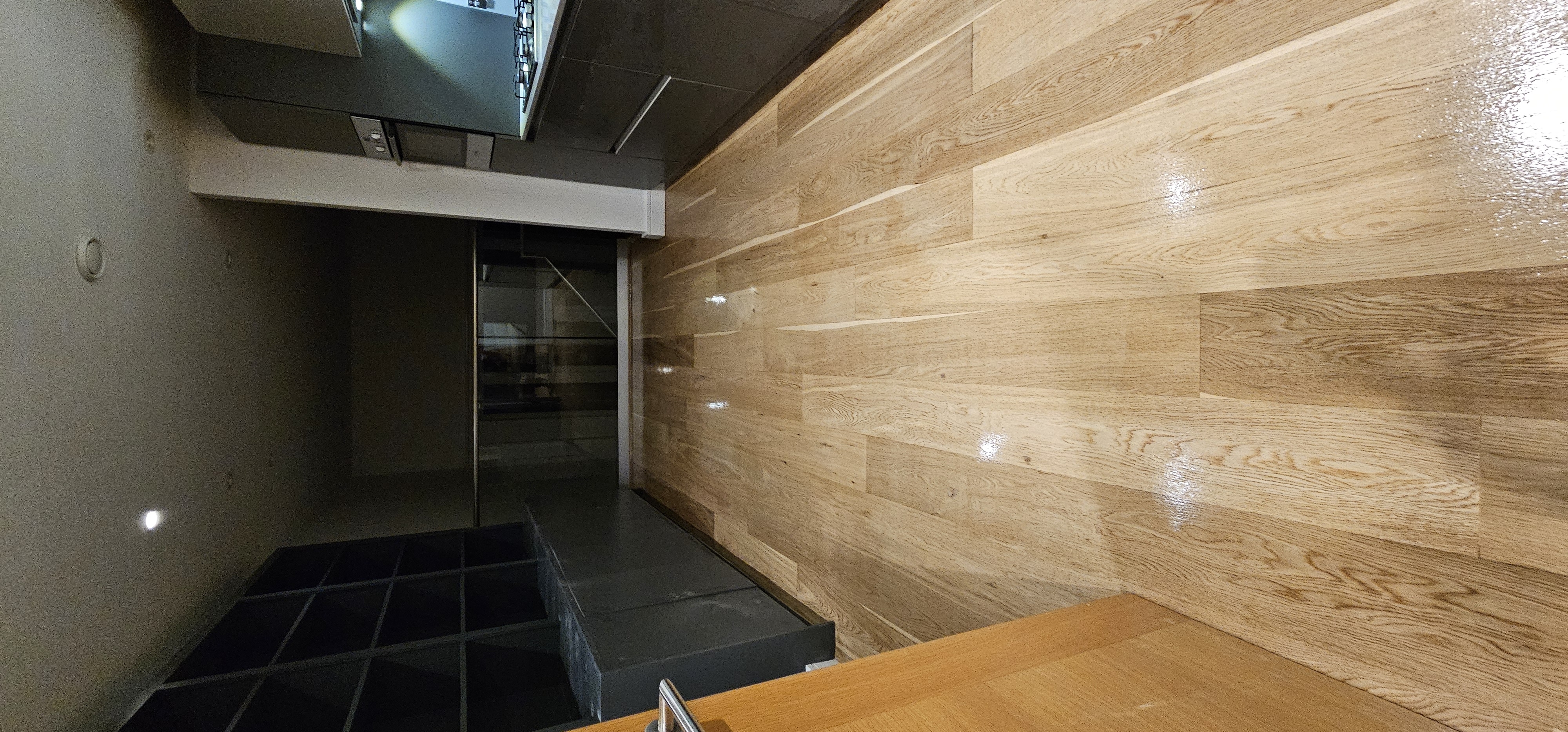
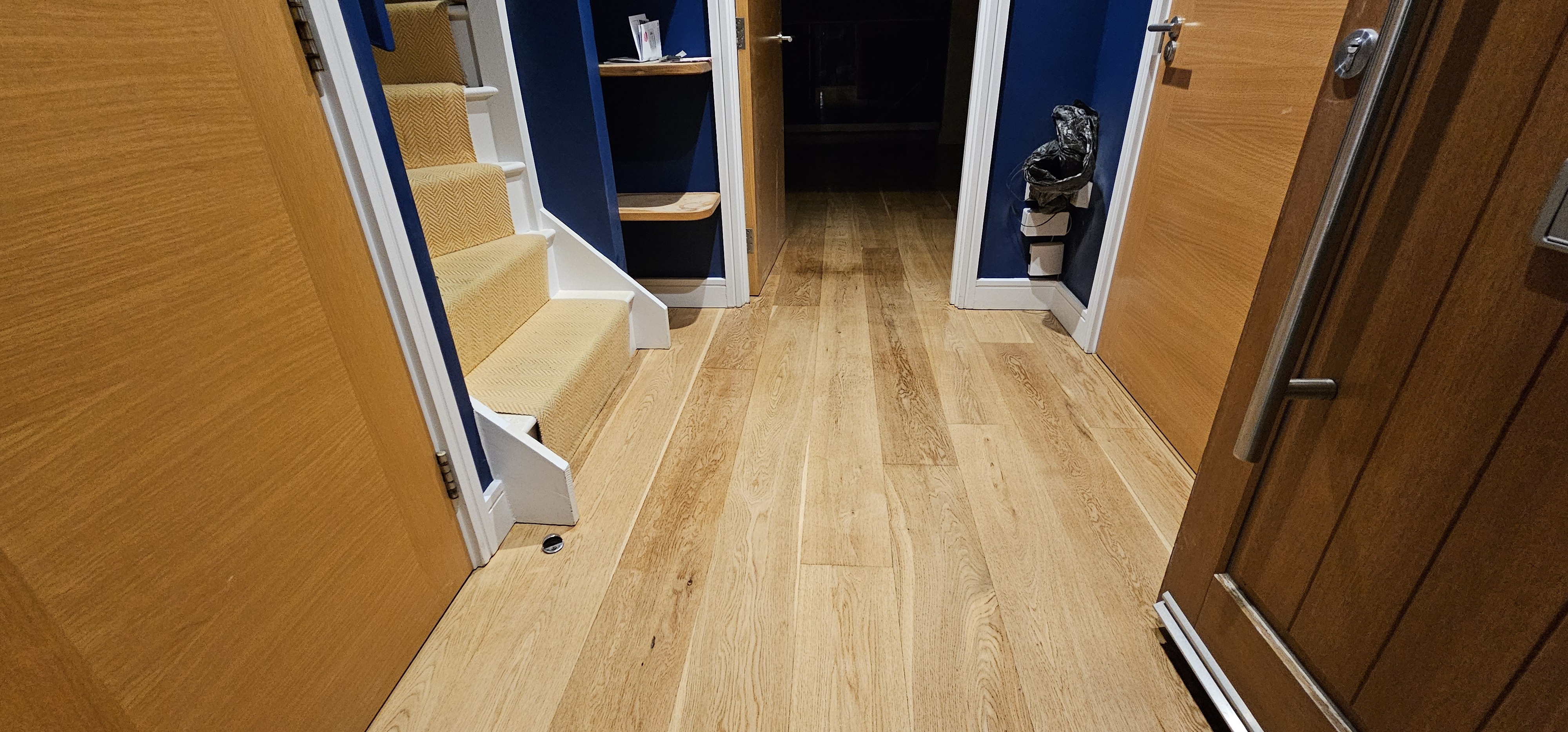
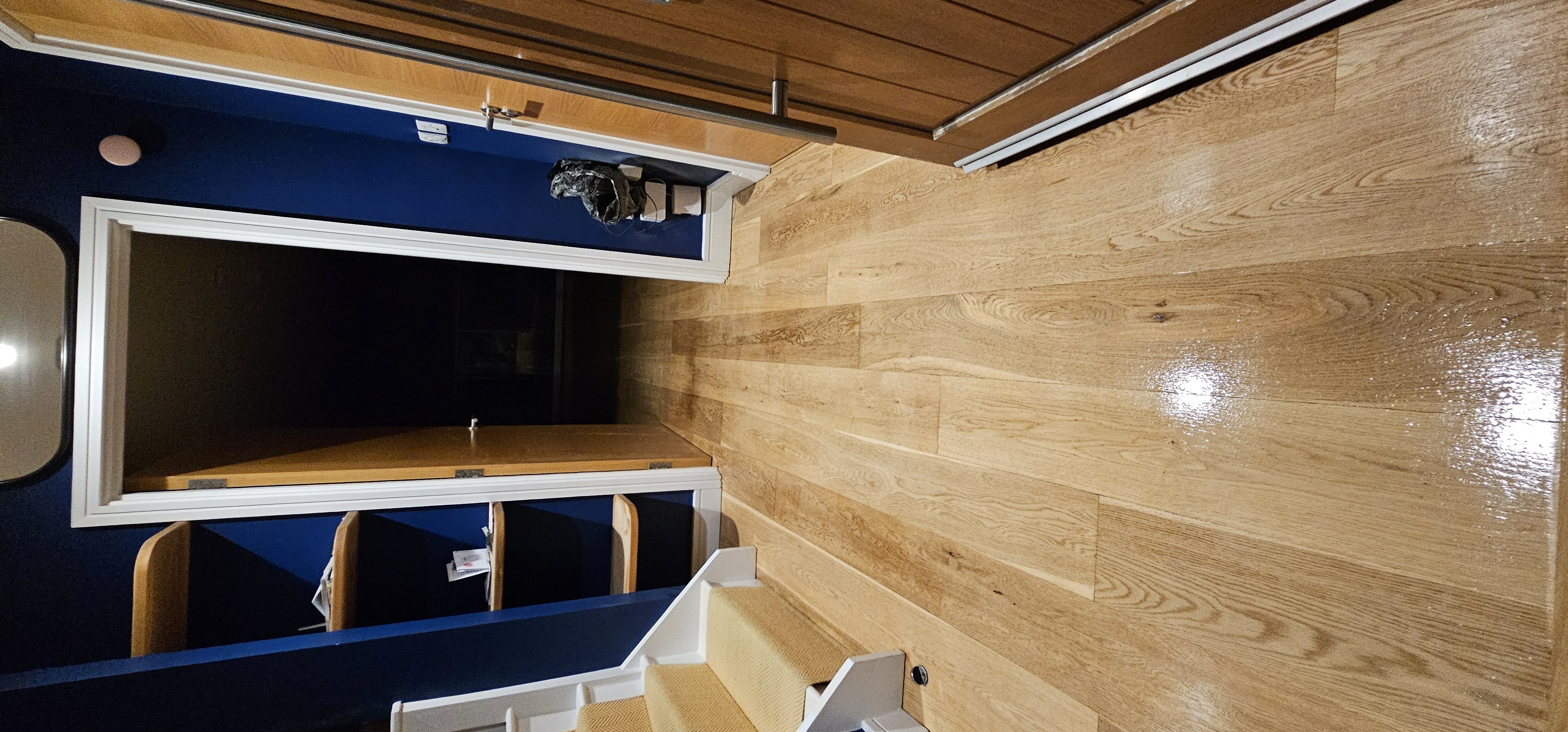
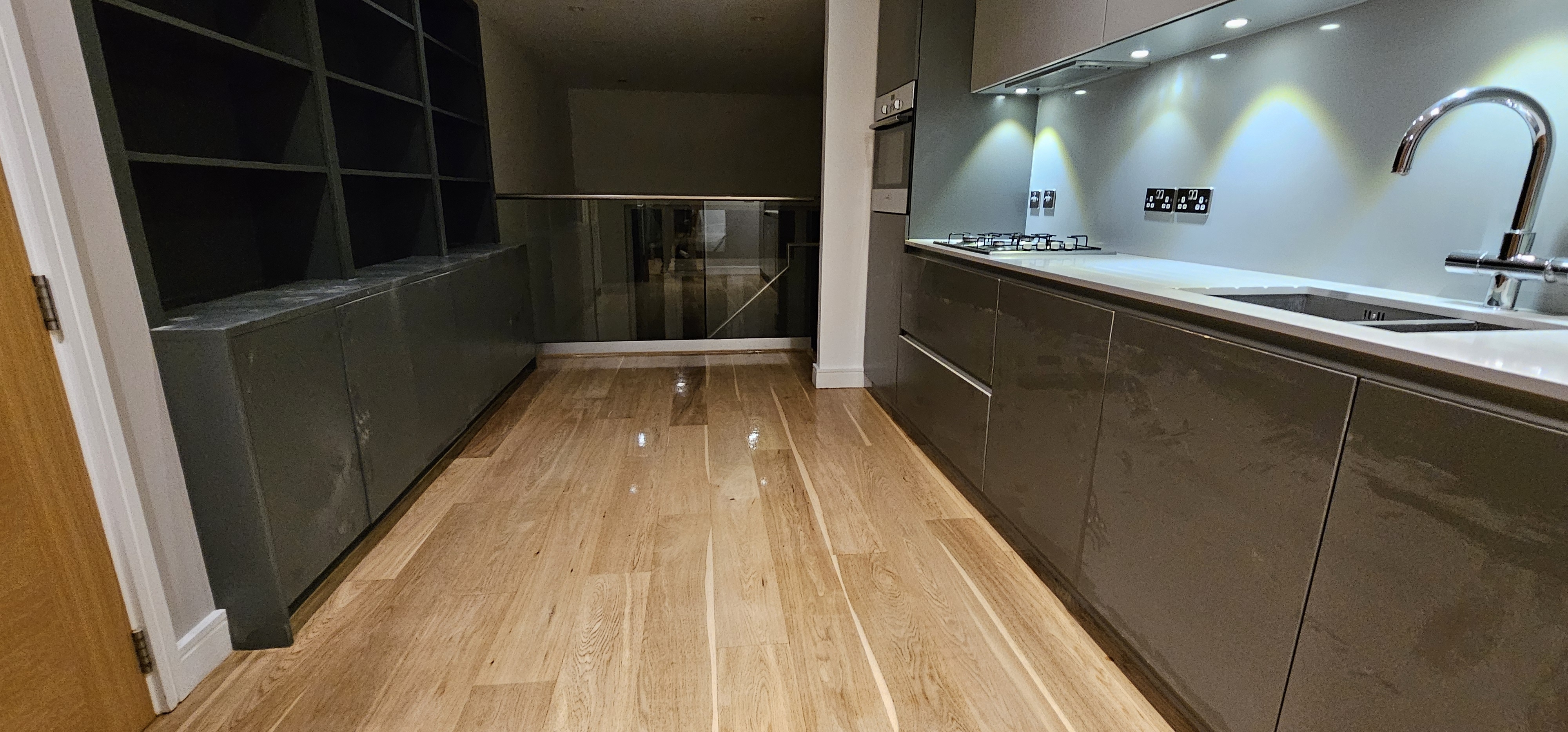
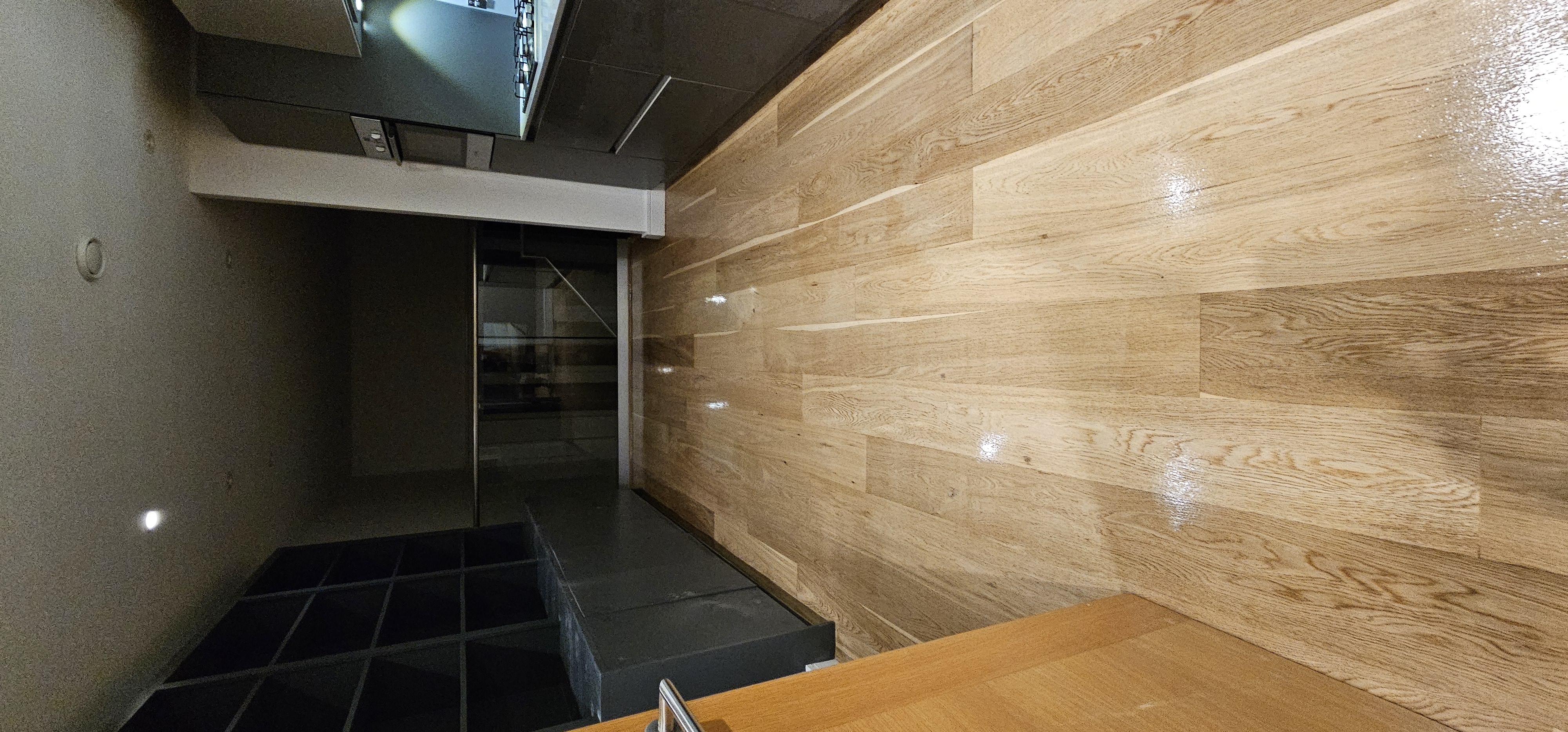
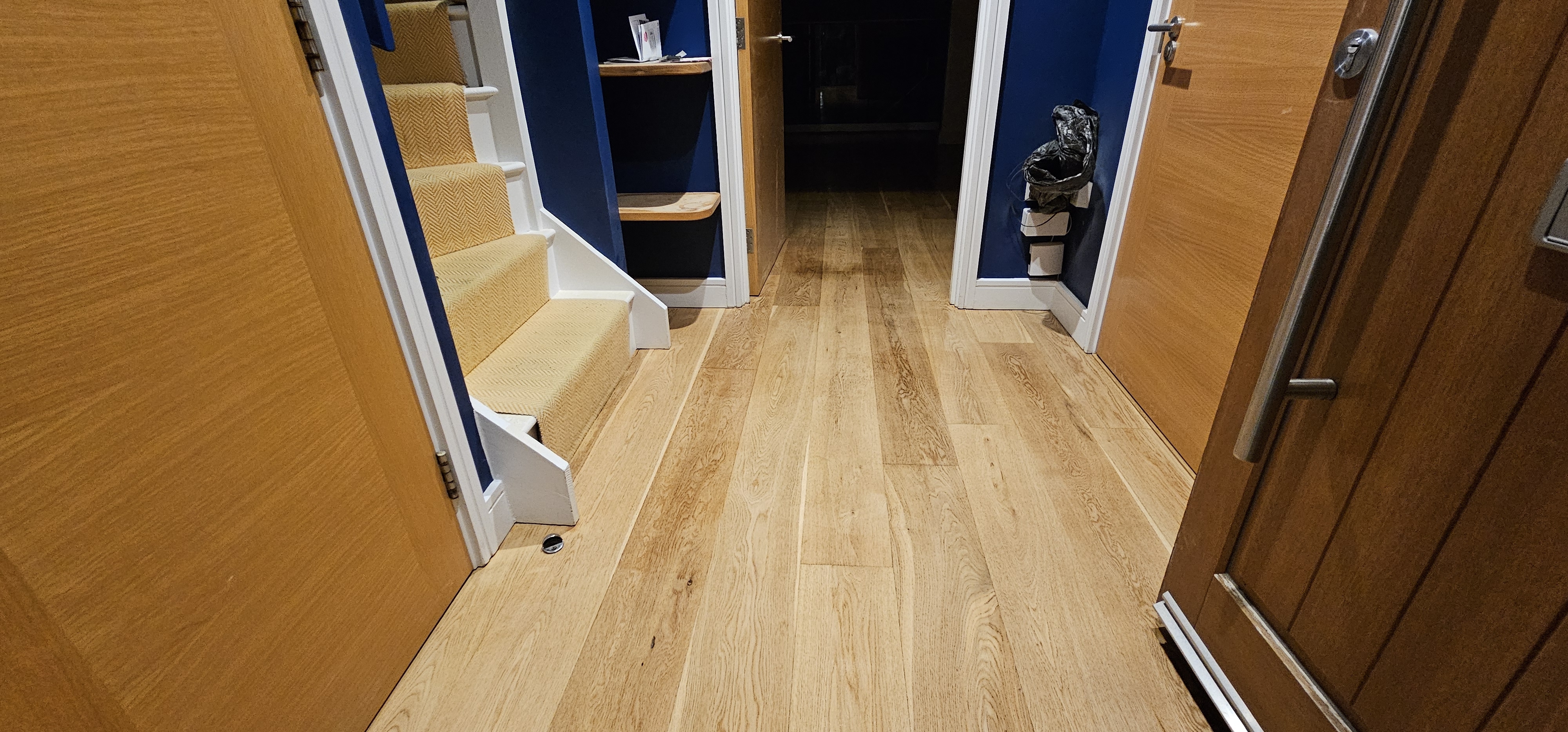
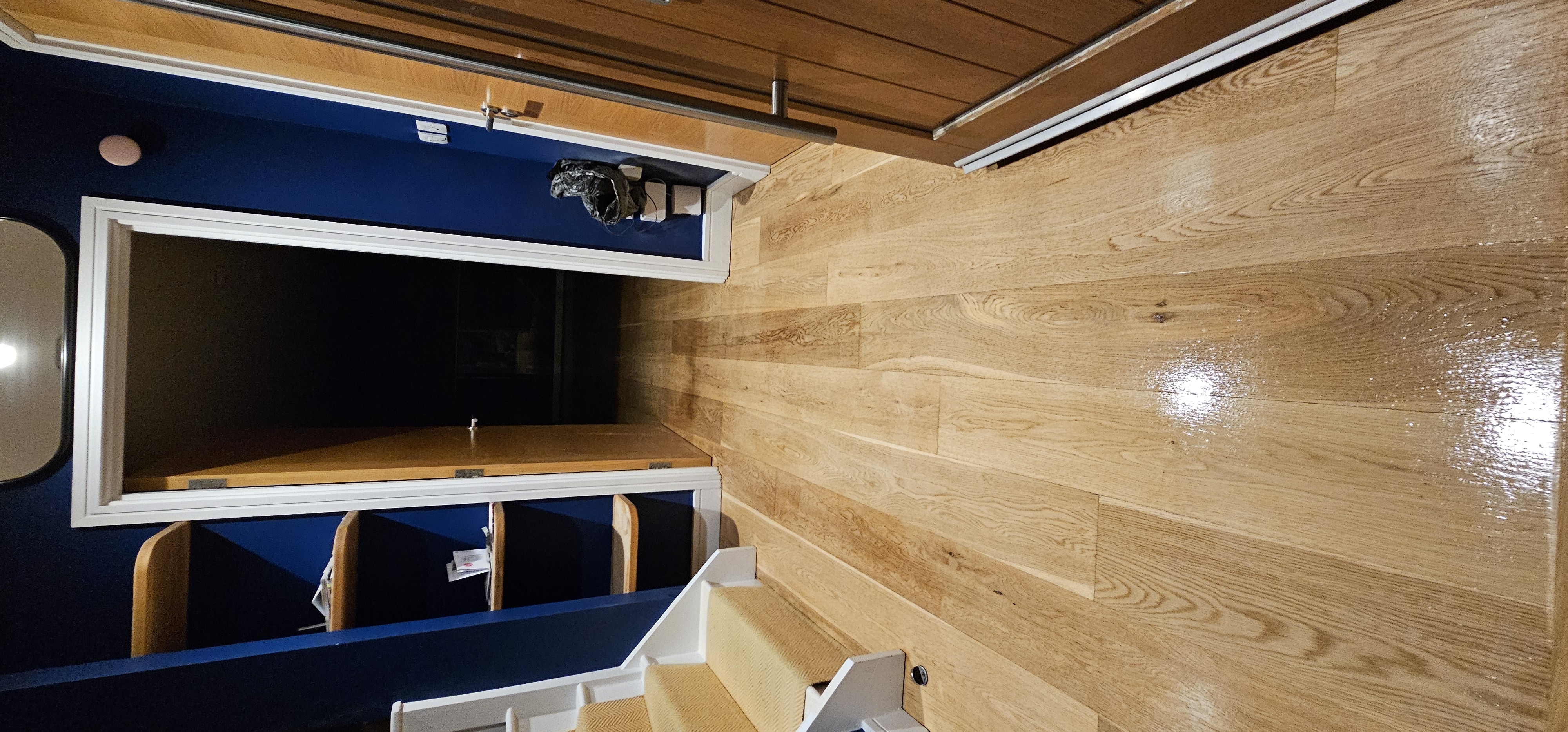
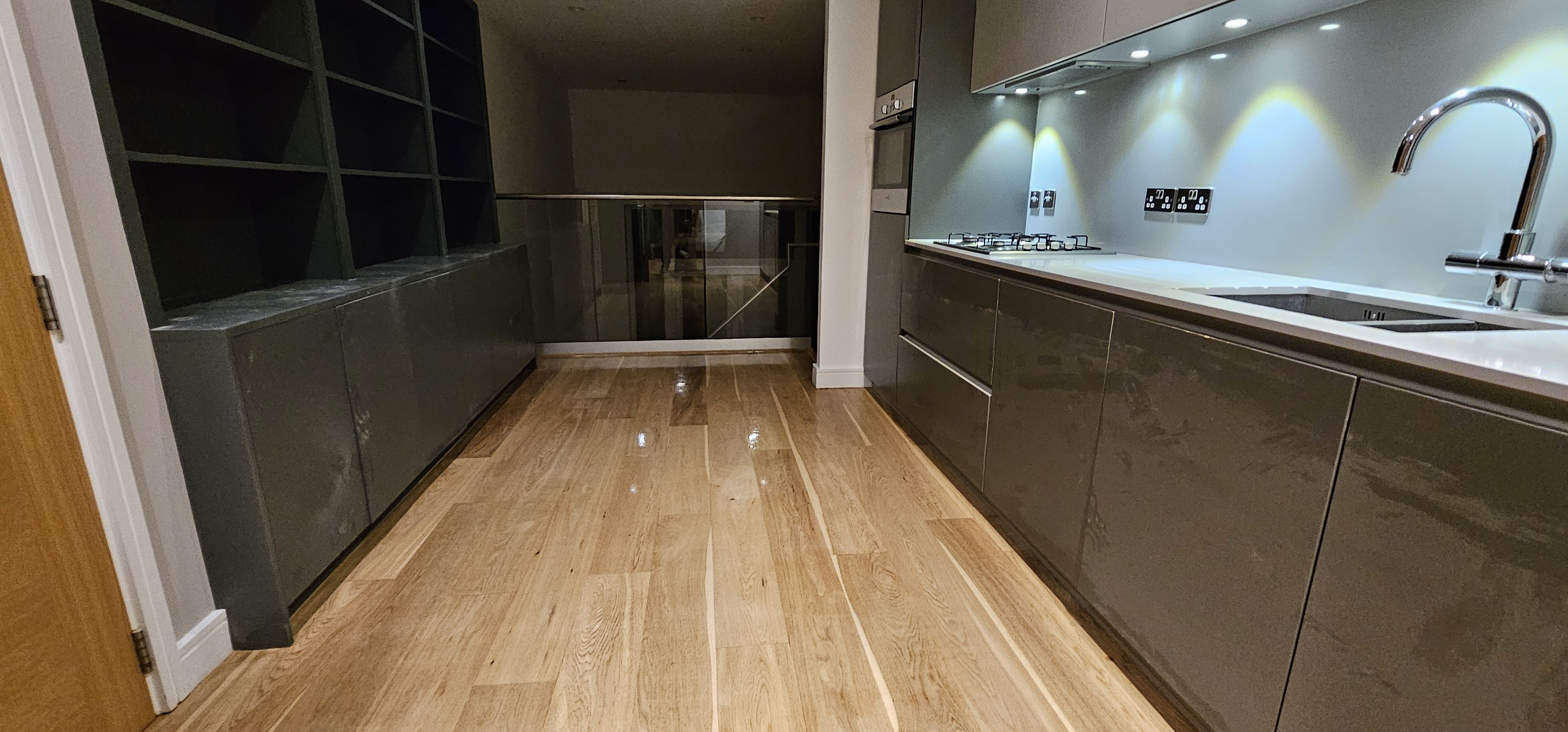
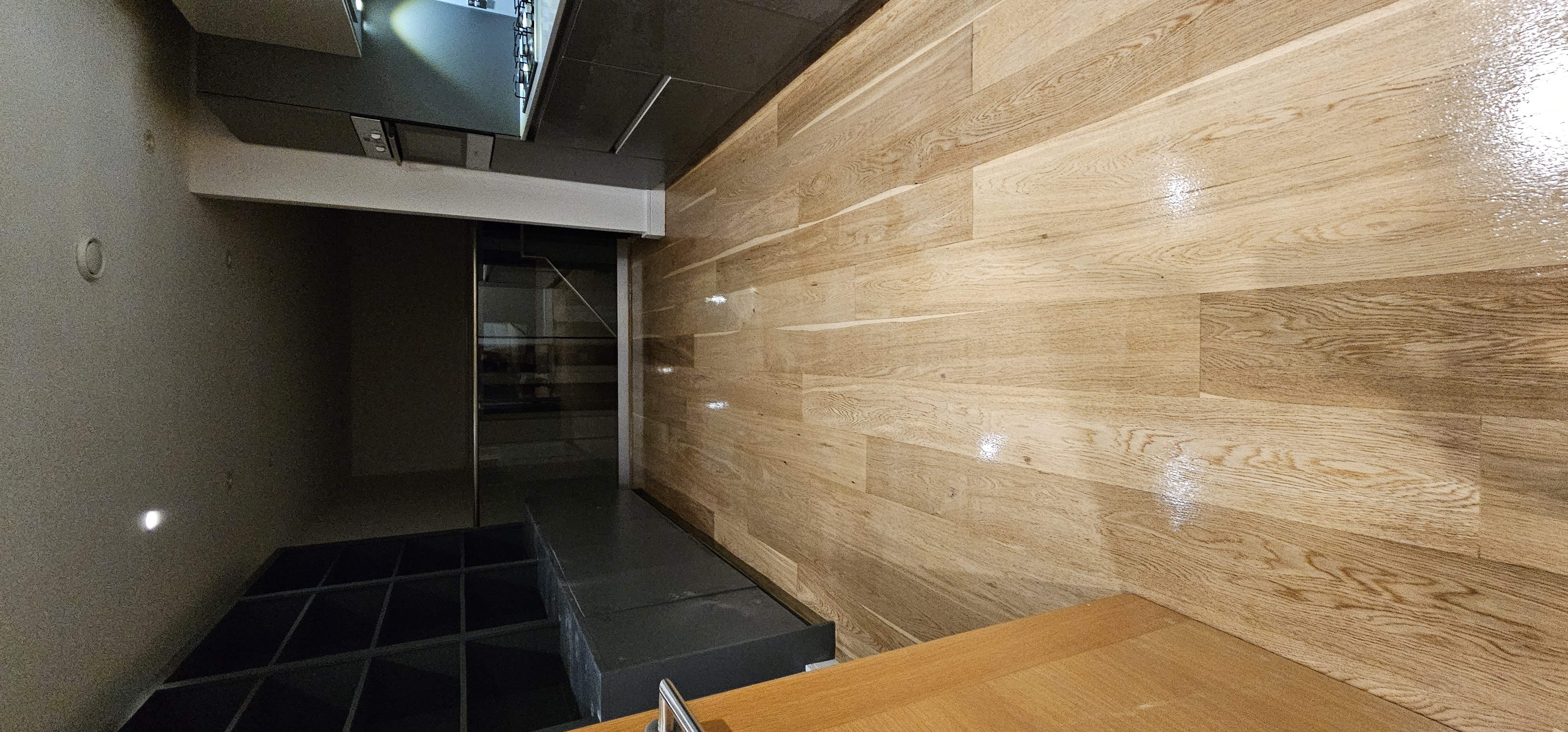
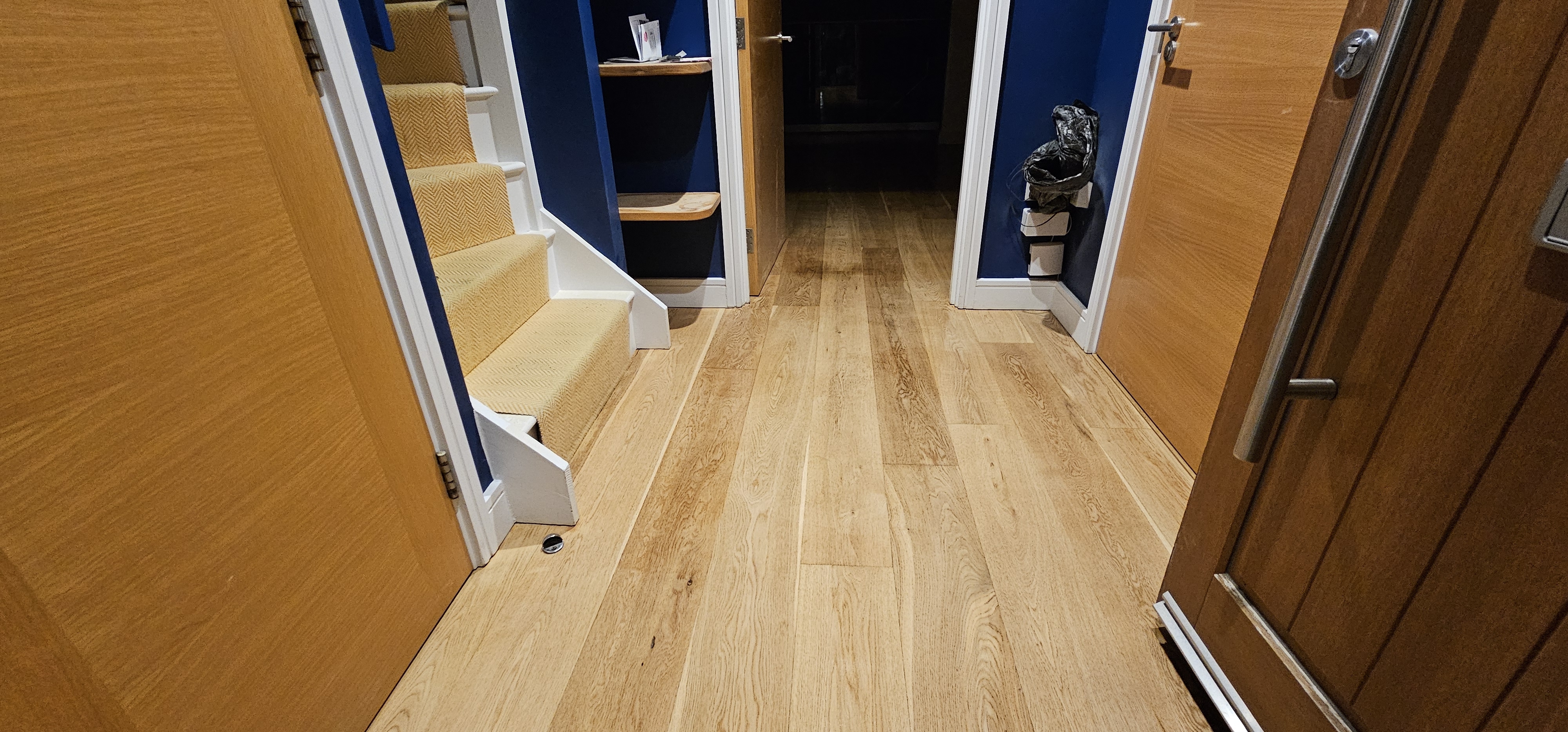
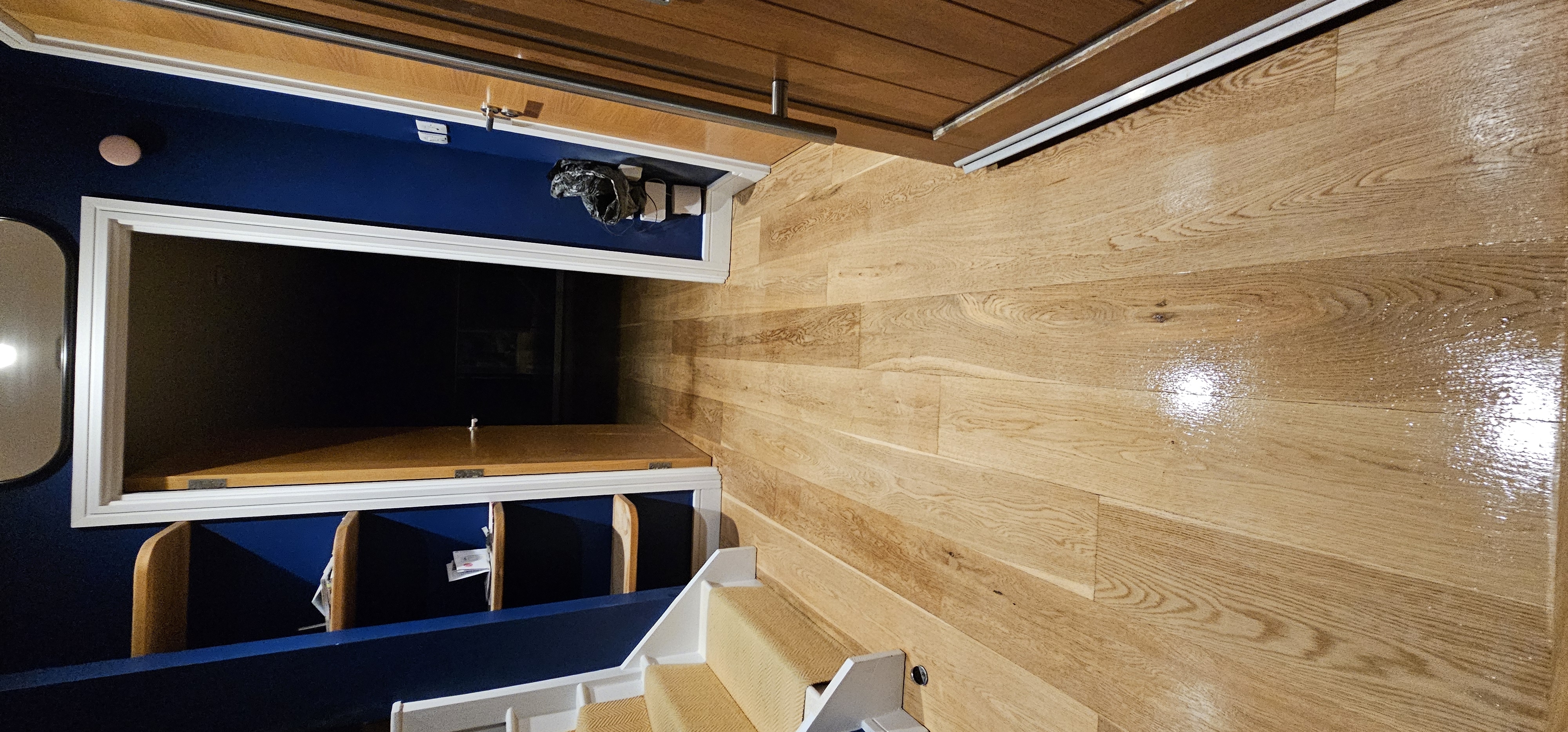
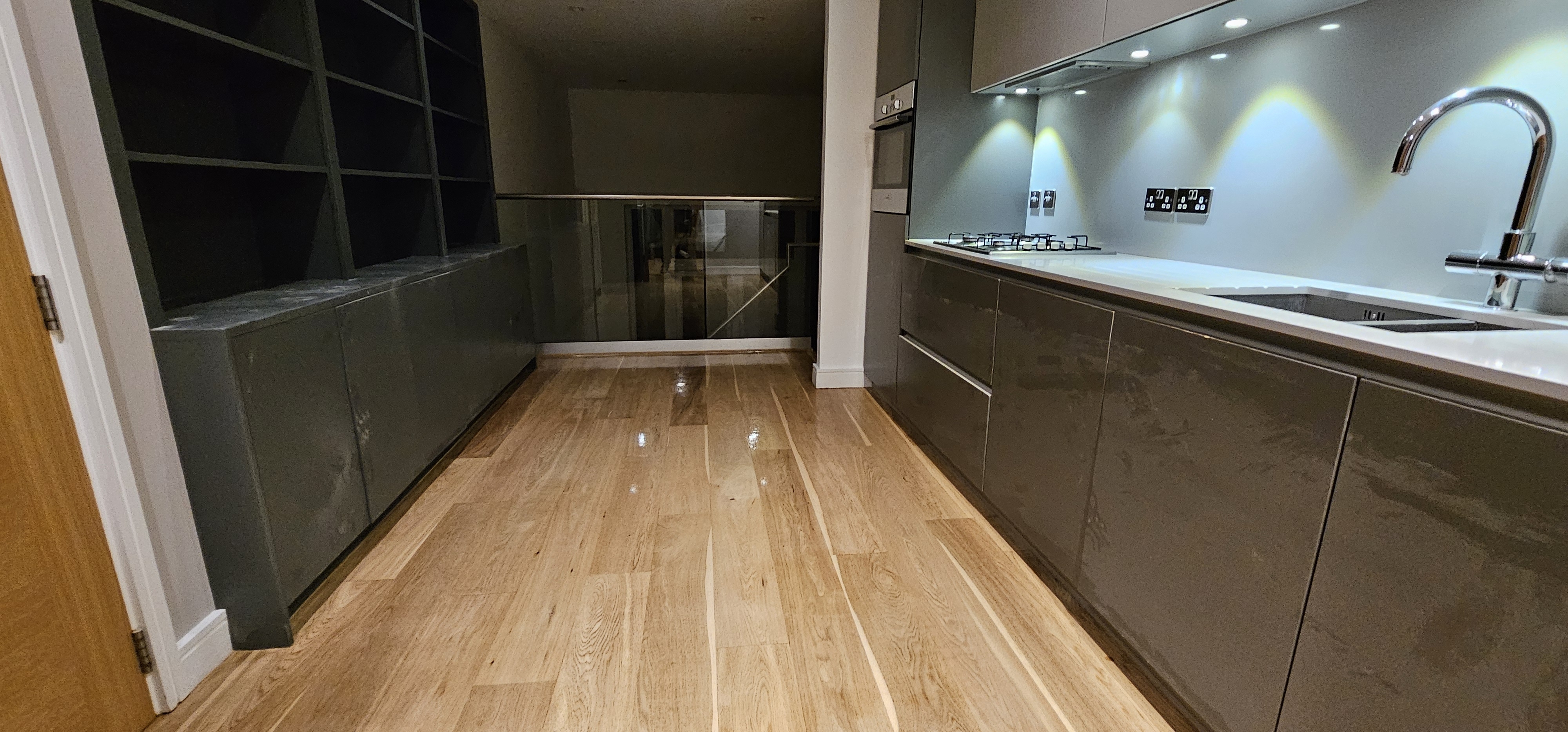
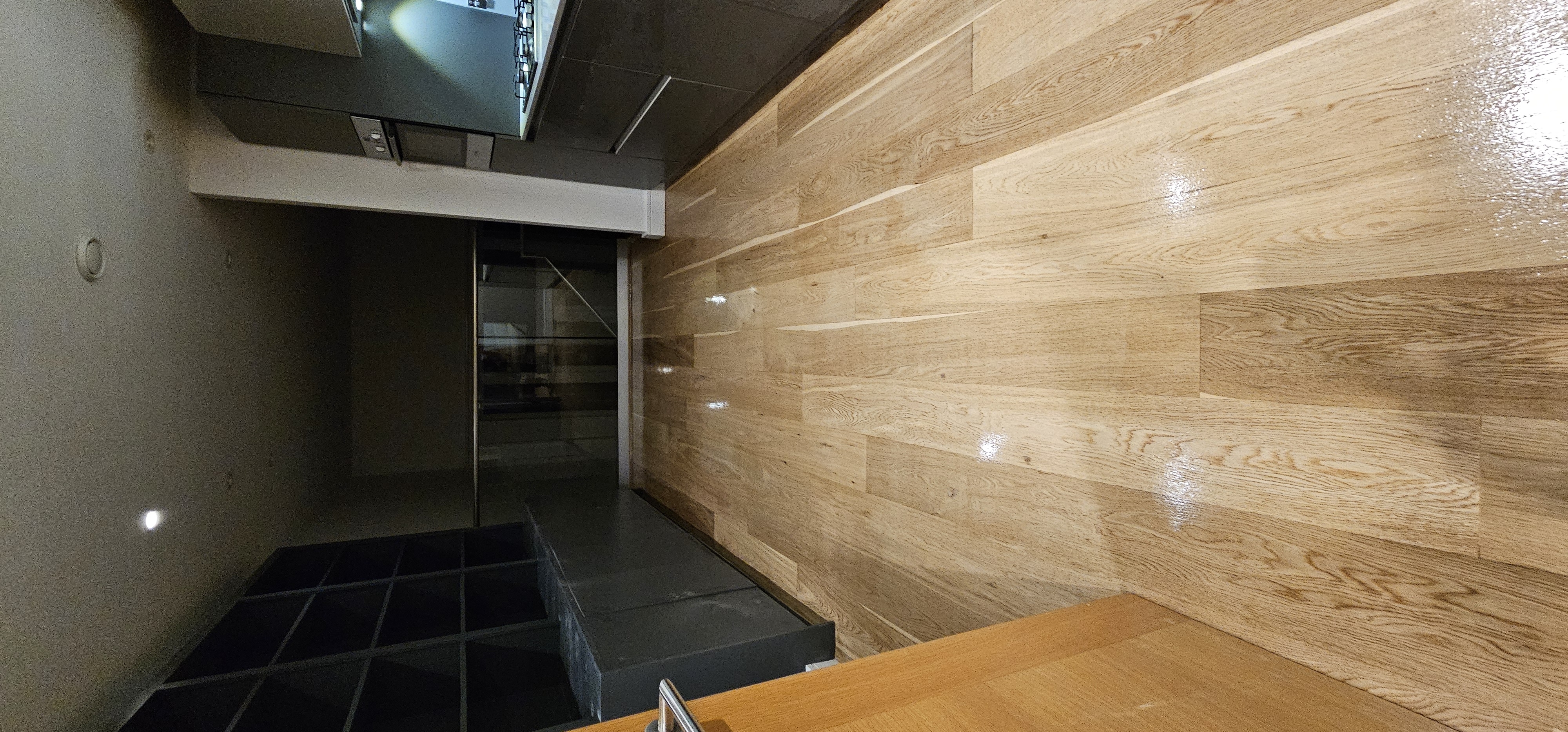
Floor Sanding and Finishing in Barnet
Floor Sanding and Finishing in Barnet
We recently completed a comprehensive floor sanding and finishing project on a Victorian property in Barnet, where the original hardwood flooring had deteriorated significantly beneath layers of old varnish and surface damage. The client wanted to restore the wood to its natural character while improving durability for everyday living. Our team stripped back the existing finish, sanded the timber to bare wood, and applied a modern protective coating that would withstand the demands of family life.
Work carried out
- Multi-stage sanding using drum and orbital sanders
- Progressive grit refinement from 40 to 120 grit
- Edge sanding in corners and against skirting boards
- Dust extraction and containment throughout
- Stain application to enhance wood tone
- Hard-wearing polyurethane finish in satin sheen
- Final inspection and touch-ups
About the project
The Barnet property presented a common challenge we encounter regularly in older homes across North London. The original pine flooring had been sealed with a dark varnish that had worn through in high traffic areas, creating an uneven appearance. Underneath this old finish, the timber itself remained sound, though it showed surface scratches and minor staining that needed addressing. We worked methodically through the sanding stages, taking care not to over-sand the softer areas of the wood or create hollows in the floor surface.
Our approach prioritised dust management, which matters significantly in a lived-in home. We sealed off the work area, used extraction equipment on our sanders, and maintained regular vacuuming throughout each day. The clients were able to stay in the property during work, though we recommended they remain on upper floors during active sanding. Once the timber was prepared, we applied a water-based stain to even out the colour variation, then finished with two coats of hard-wearing polyurethane. This combination provides protection against moisture, scratches, and general wear while maintaining the natural appearance the family wanted.
About our Barnet service
Barnet's housing stock spans several distinct periods, which shapes the flooring challenges we encounter. Victorian and Edwardian properties dominate the older areas of the borough, typically featuring solid timber floors in pine, oak, or occasionally mixed hardwoods. These floors have character but often need significant work after a century or more of use. New build developments in Barnet tend to have engineered timber or laminate flooring that cannot be sanded in the traditional way, so we focus our work on the period properties where sanding makes genuine sense. Many homeowners moving into these older properties inherit floors in poor condition and view sanding as a cost-effective way to transform them without full replacement.
Working regularly across Barnet, we've developed an understanding of local building characteristics. Ground floor rooms often sit slightly lower than external levels, which affects moisture patterns in the timber. Period properties frequently have slightly uneven floors, which we account for during sanding to avoid creating trip hazards. We're familiar with the local conservation areas too, and understand when projects need to respect original features rather than modernise them entirely. Our experience in the area means we can give clients realistic expectations about what their specific floor can achieve and roughly how long the work will take.
Frequently asked questions
How much does floor sanding cost?
Sanding costs typically fall between £25 and £45 per square metre, depending on the floor condition, timber type, and finish specification. A room with old varnish that strips easily costs less than one where deep stains or water damage requires more intensive work. We provide a quotation after visiting the property and assessing the actual state of the timber.
How long does the sanding process take?
For a typical room of around 20 square metres, sanding and finishing usually takes three to five working days. Larger areas or complex floor layouts take proportionally longer. The timber then needs time to cure before normal use, typically 48 hours for light foot traffic and a full week before moving furniture back.
Is floor sanding a dusty process?
Modern sanding generates substantial dust if not properly managed. We use industrial extraction equipment that captures most particles at source, significantly reducing airborne dust compared to older methods. We also contain the work area and advise on sealing gaps around doors. Some dust is unavoidable, but our approach keeps it to a minimum for occupied properties.
Project Gallery