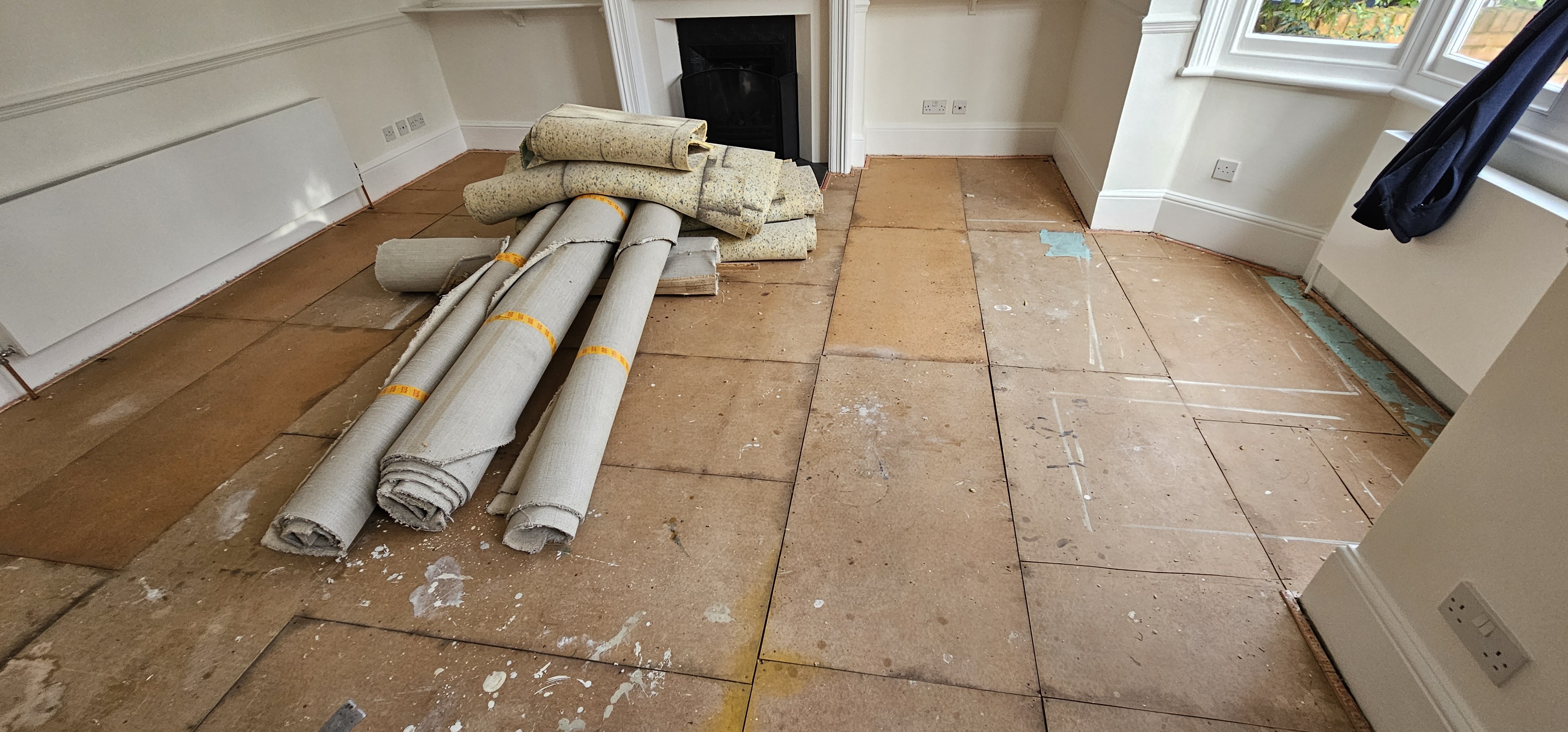
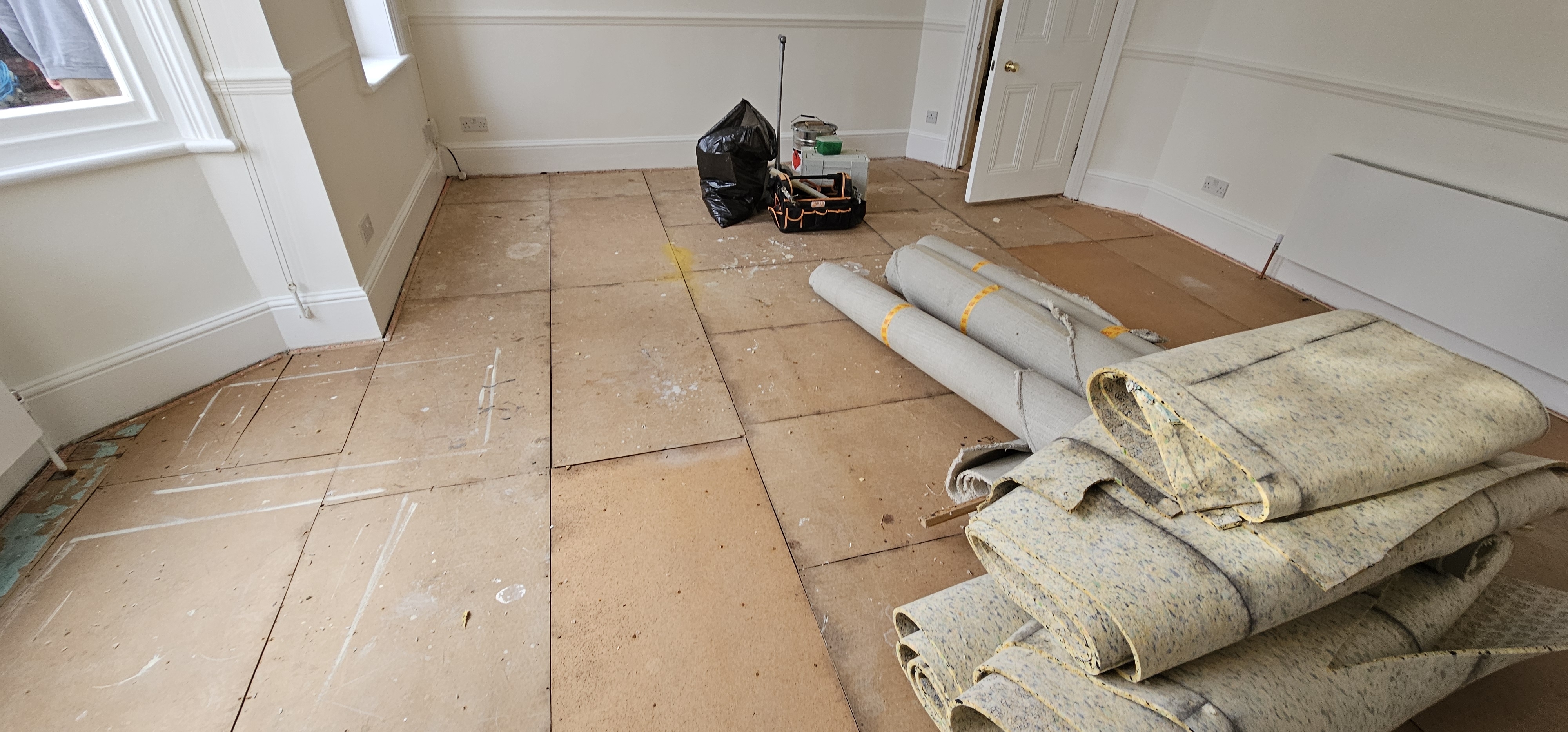
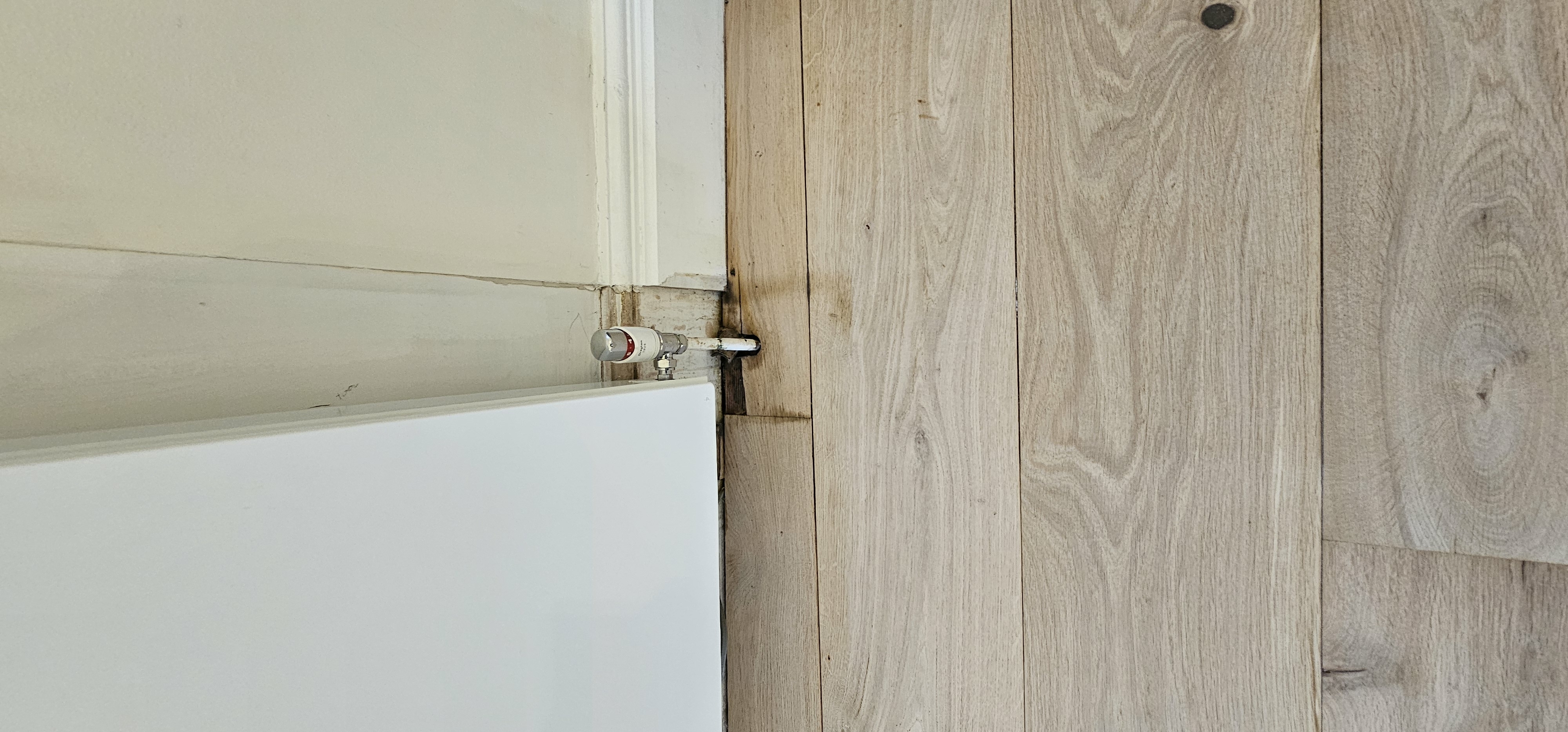
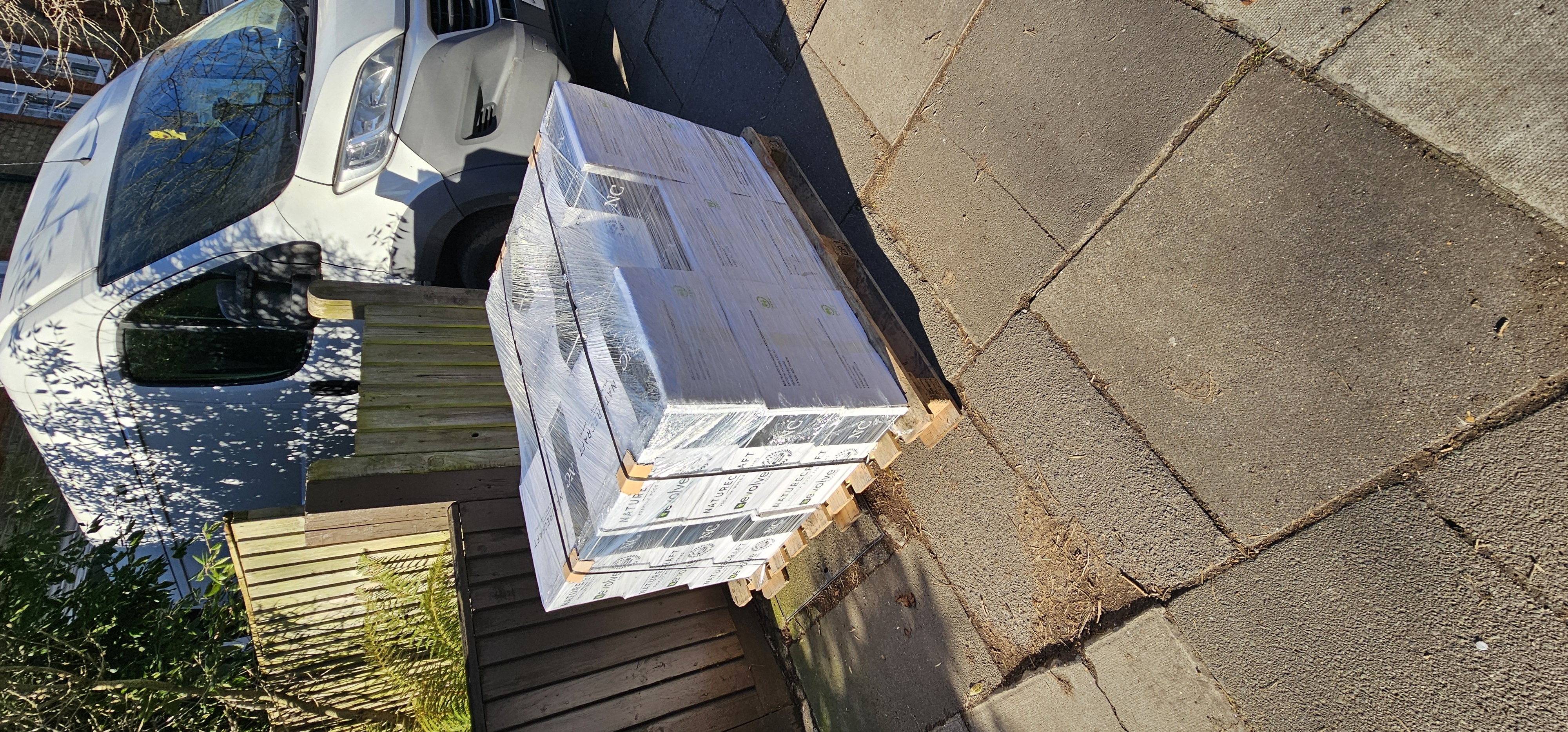
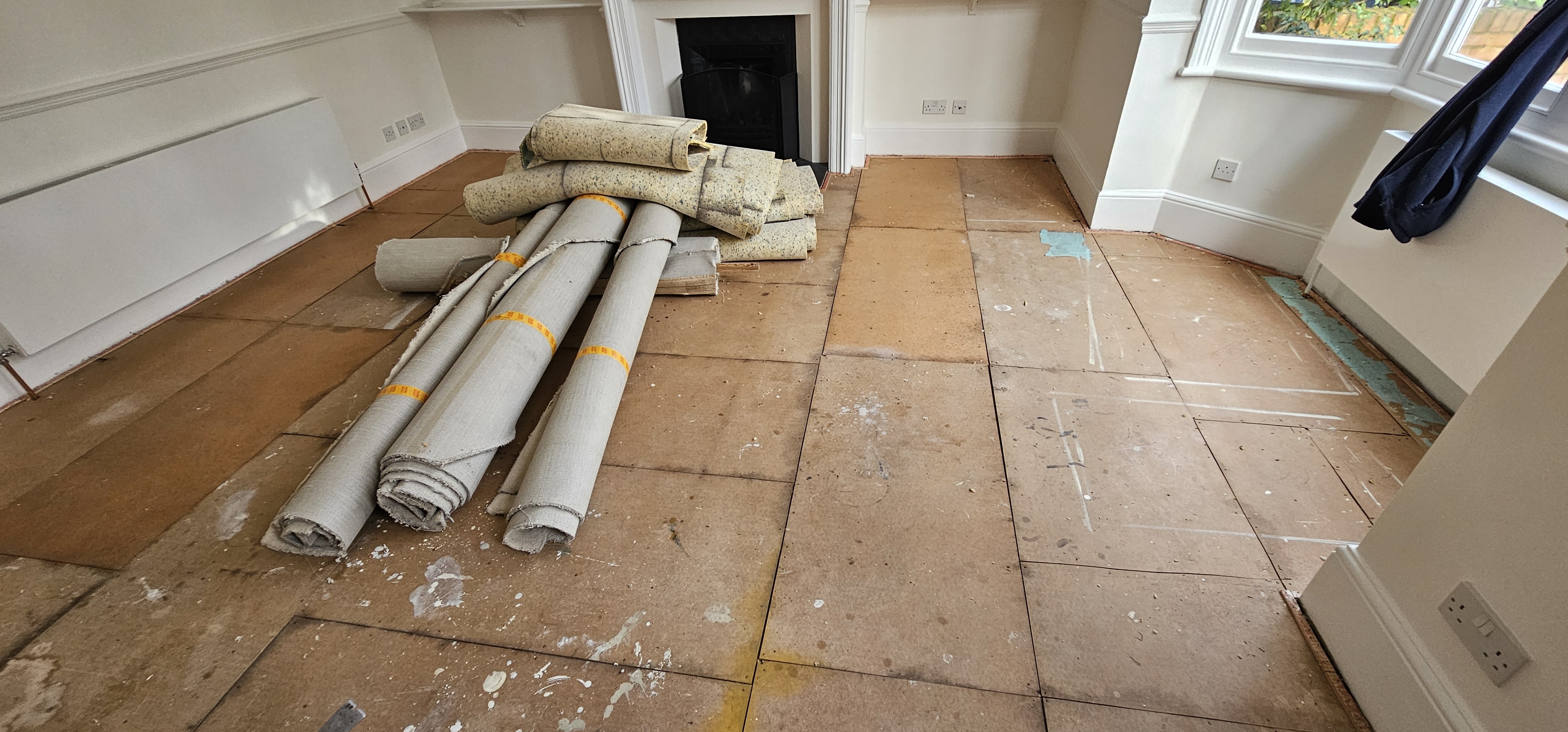
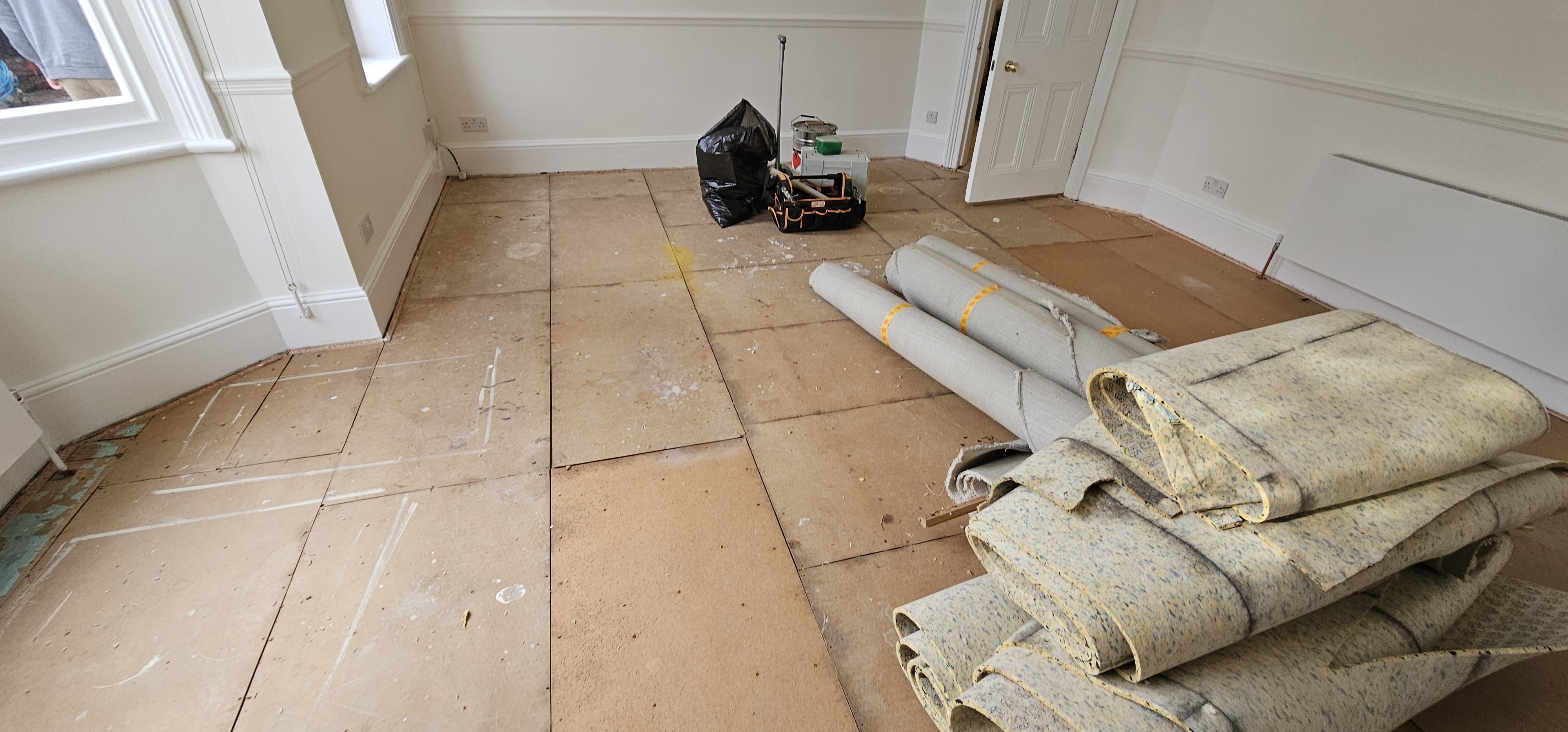
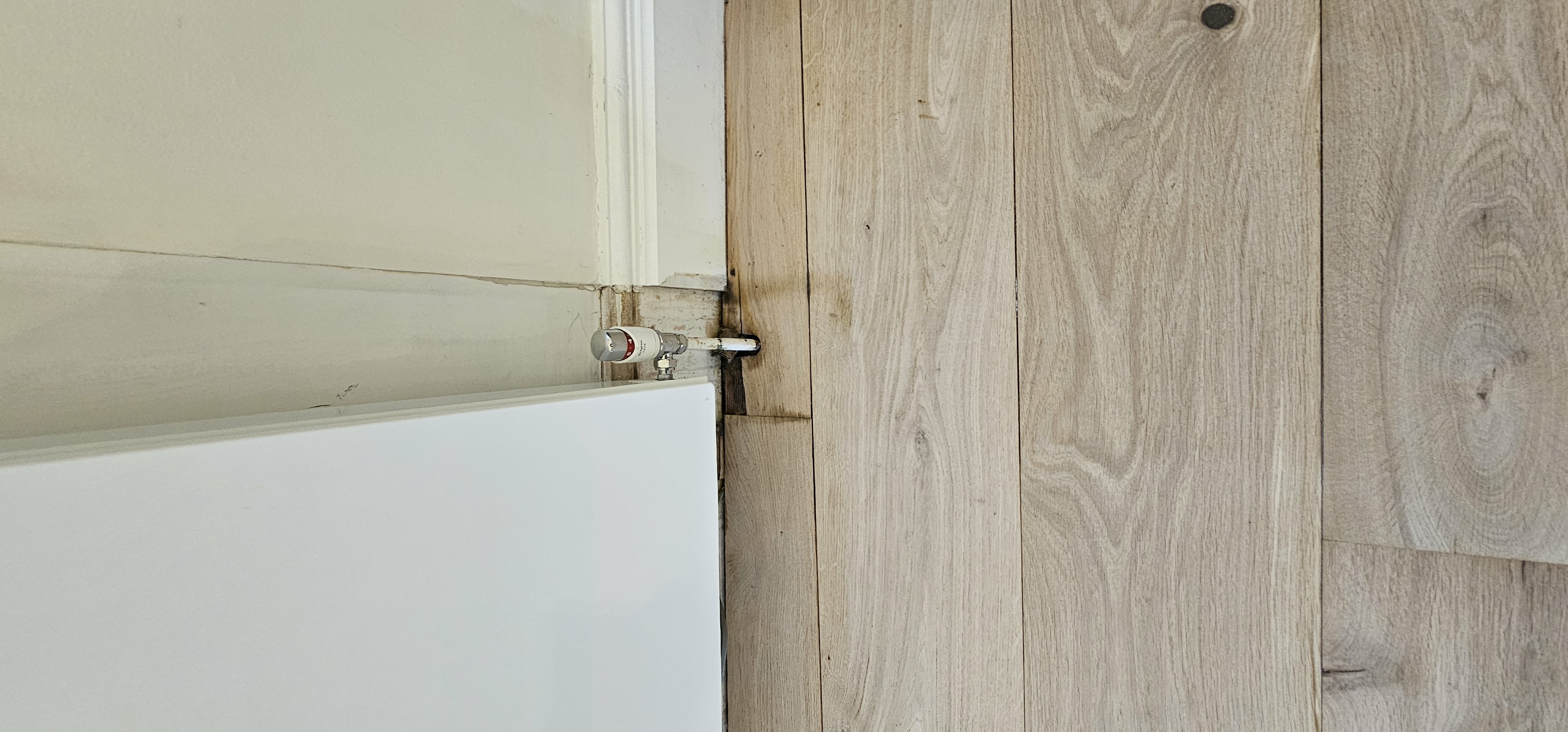
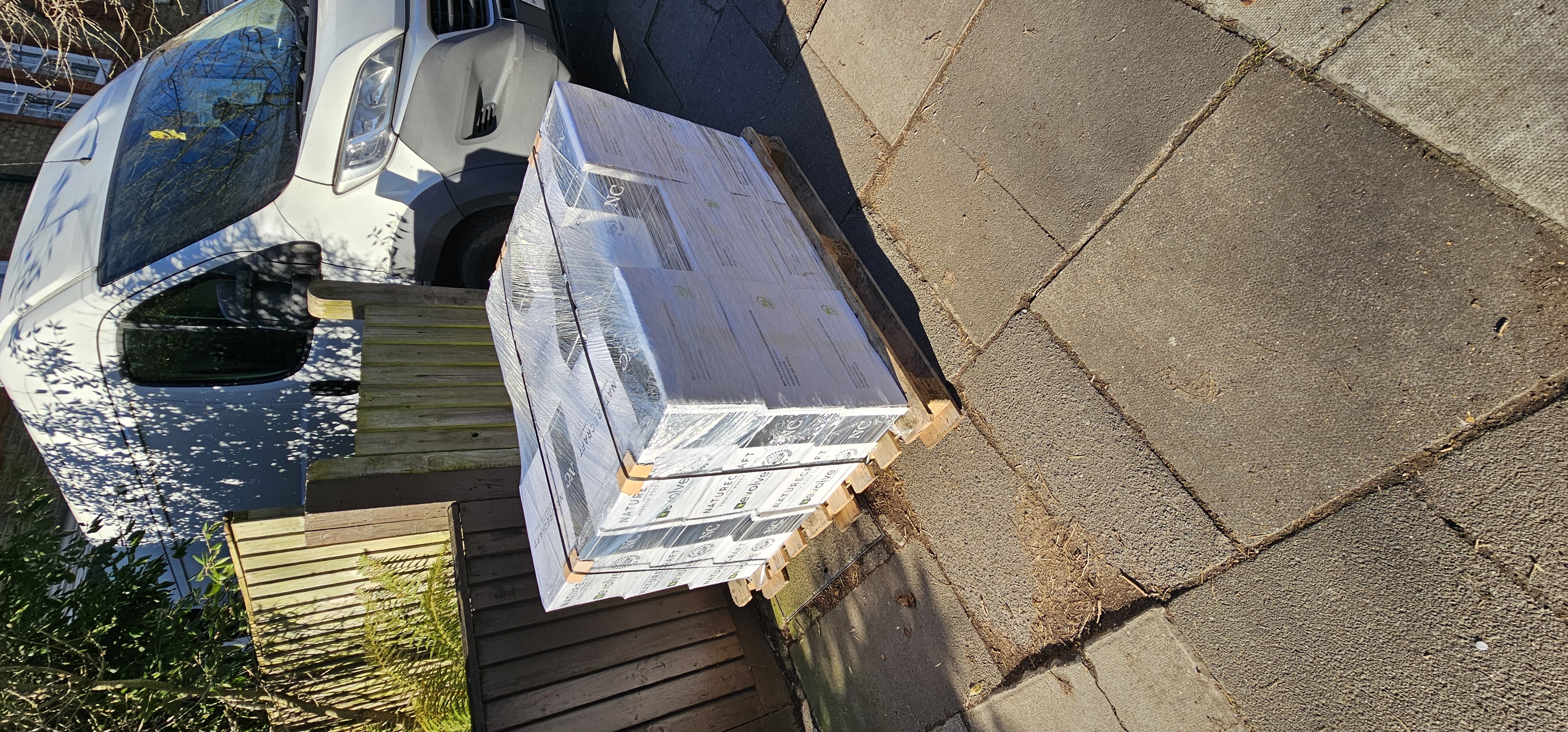
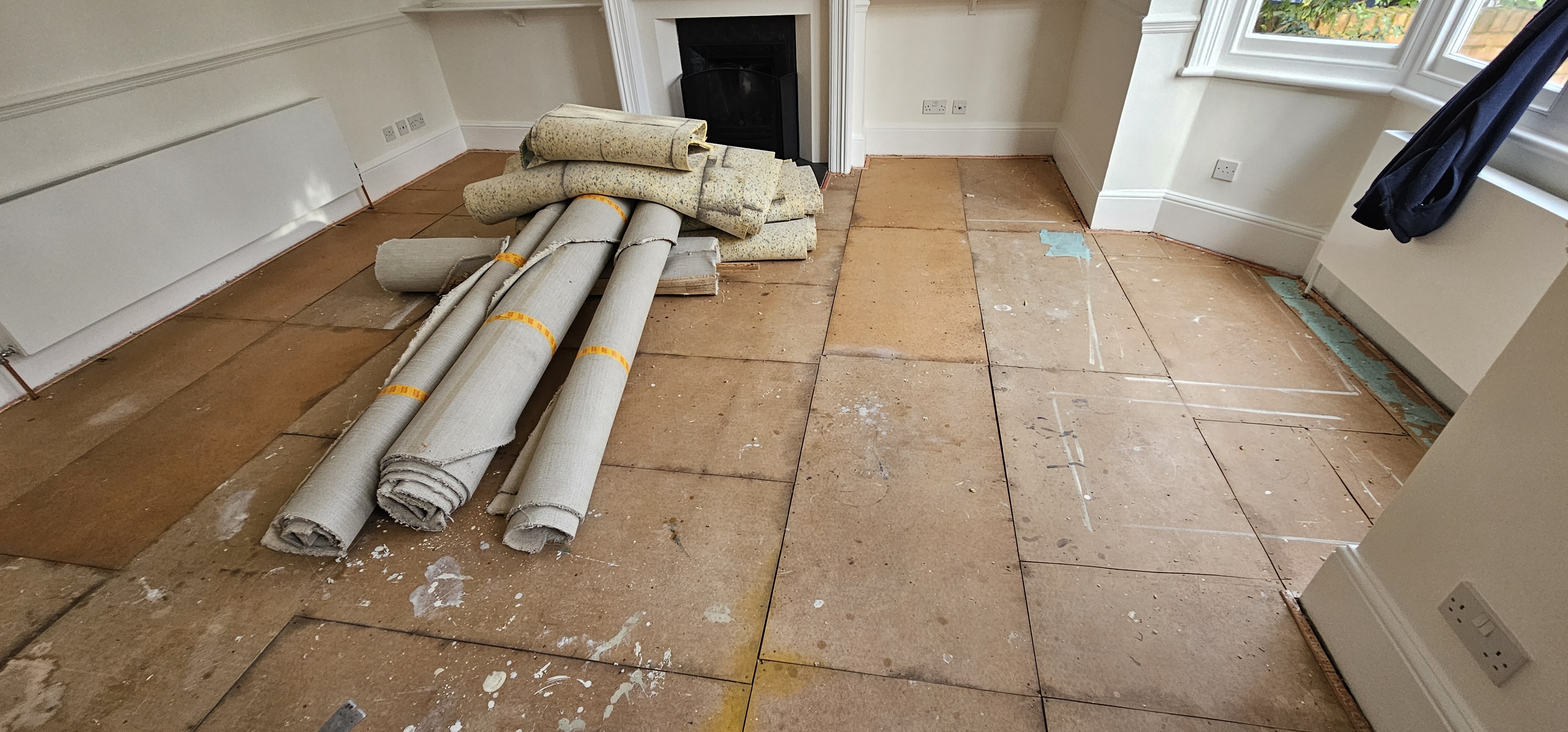
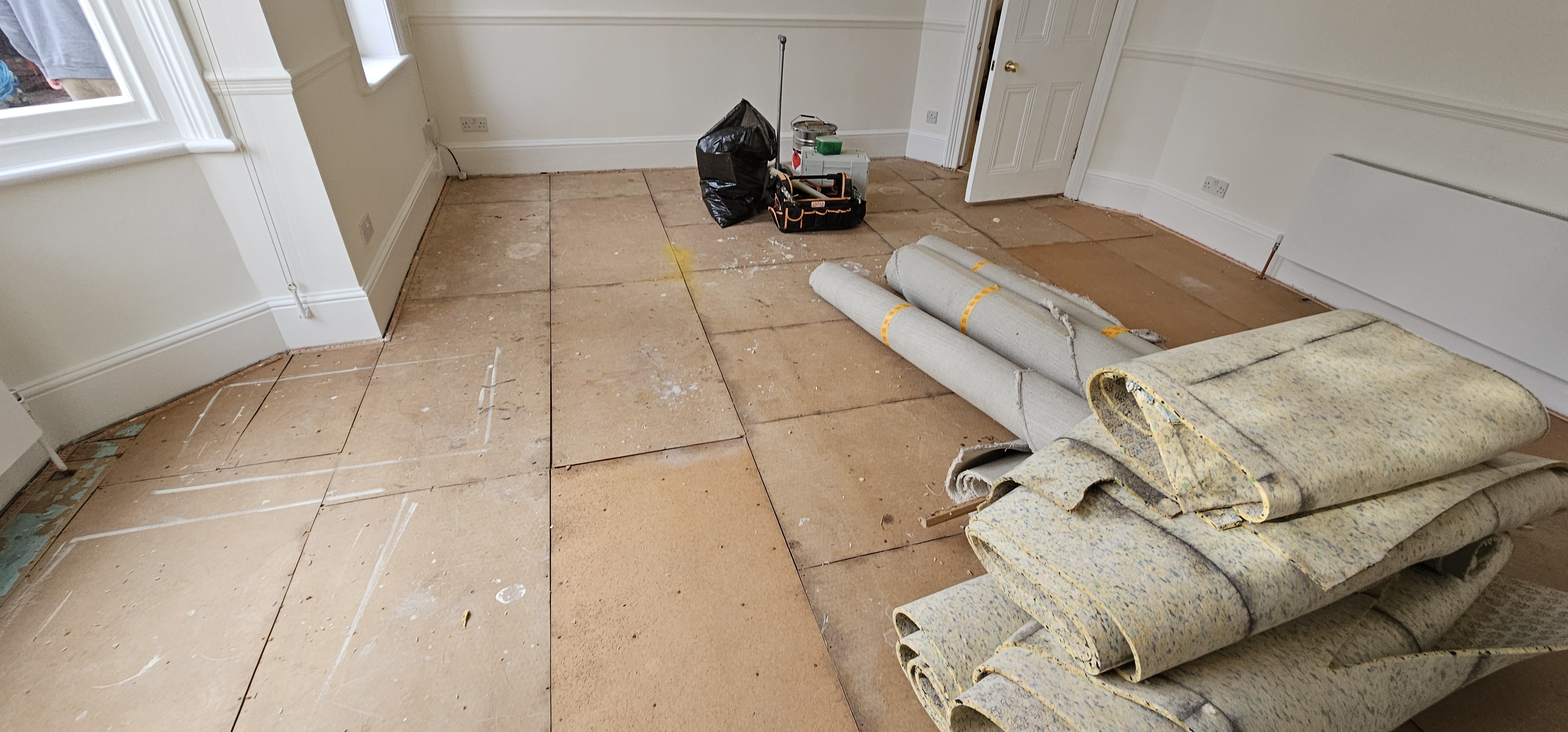
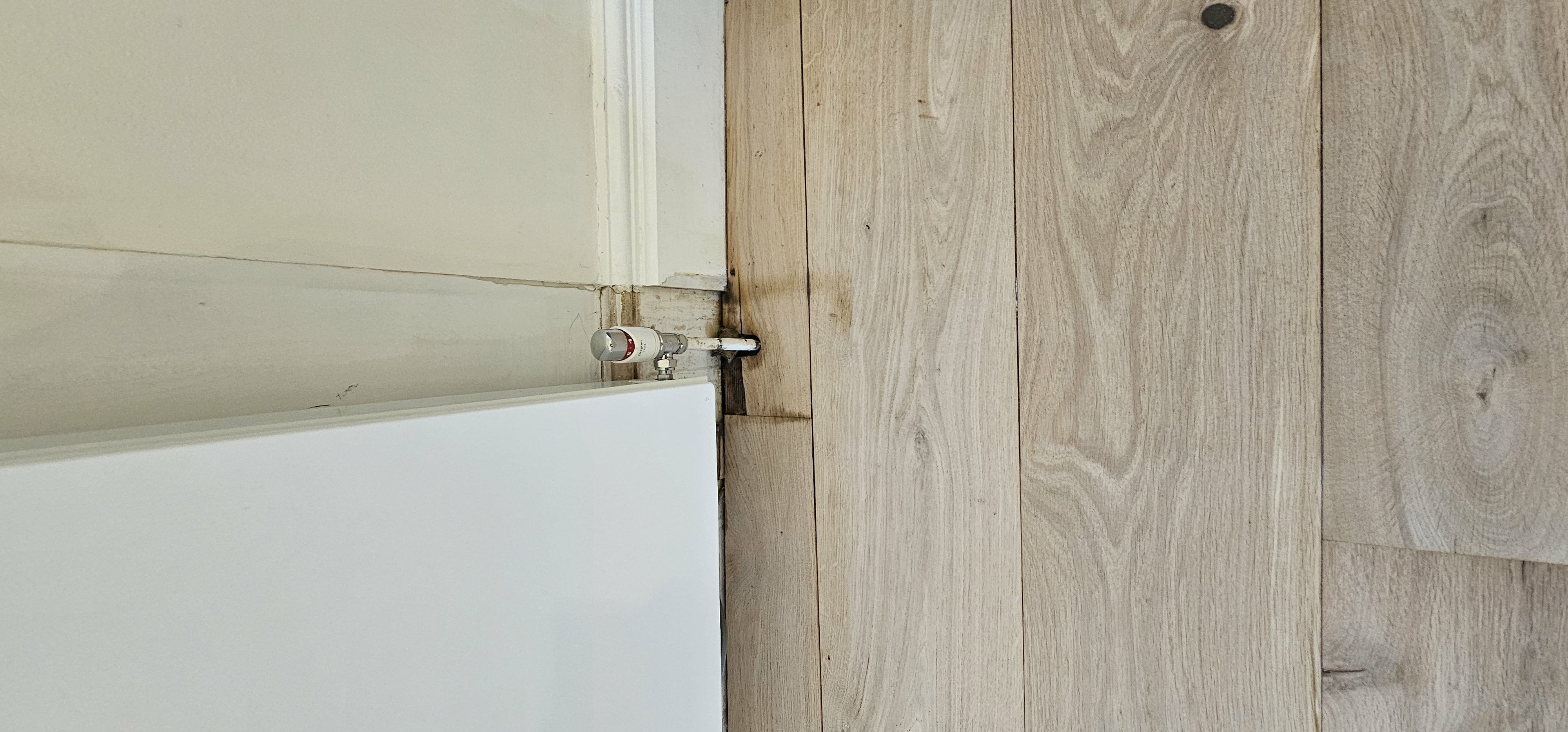
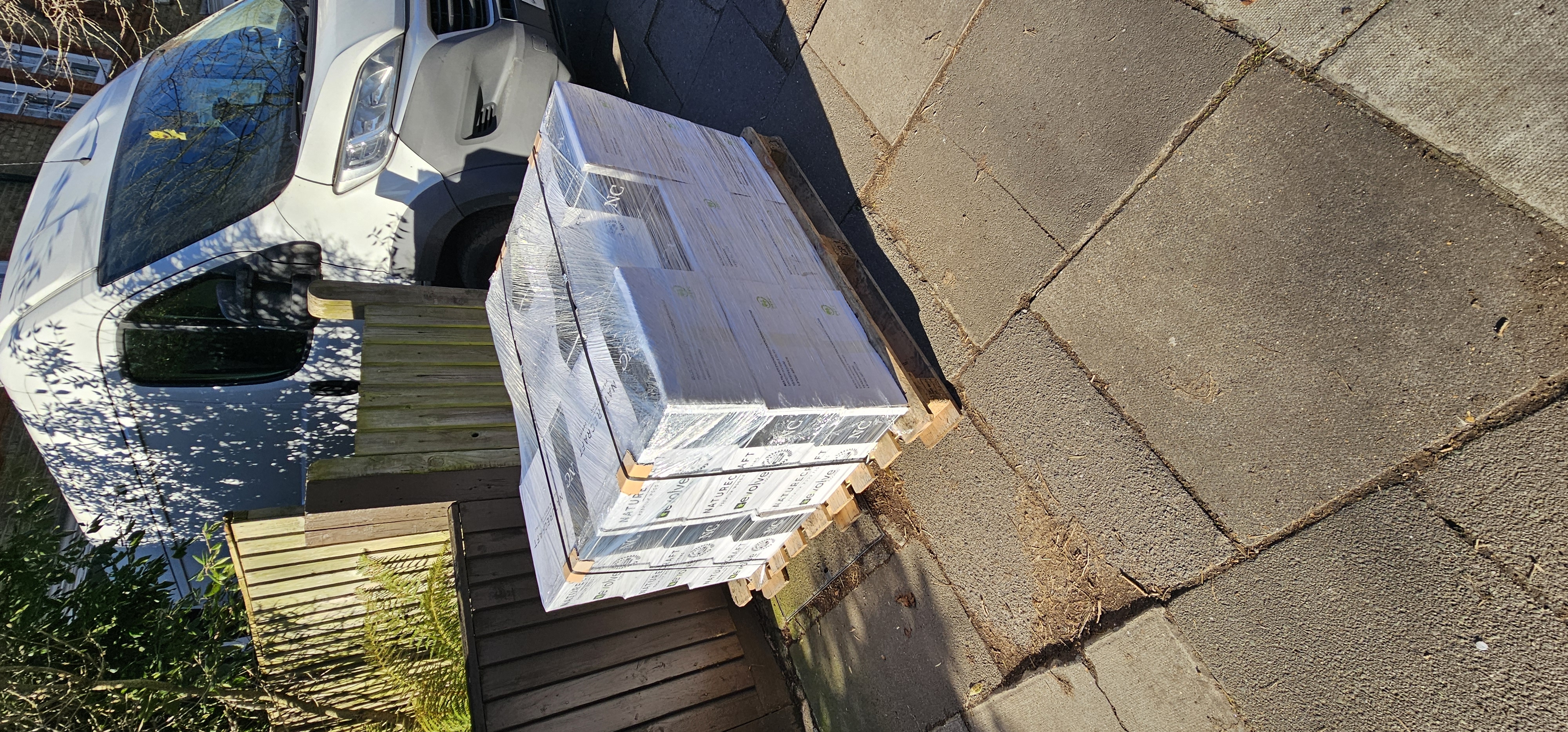
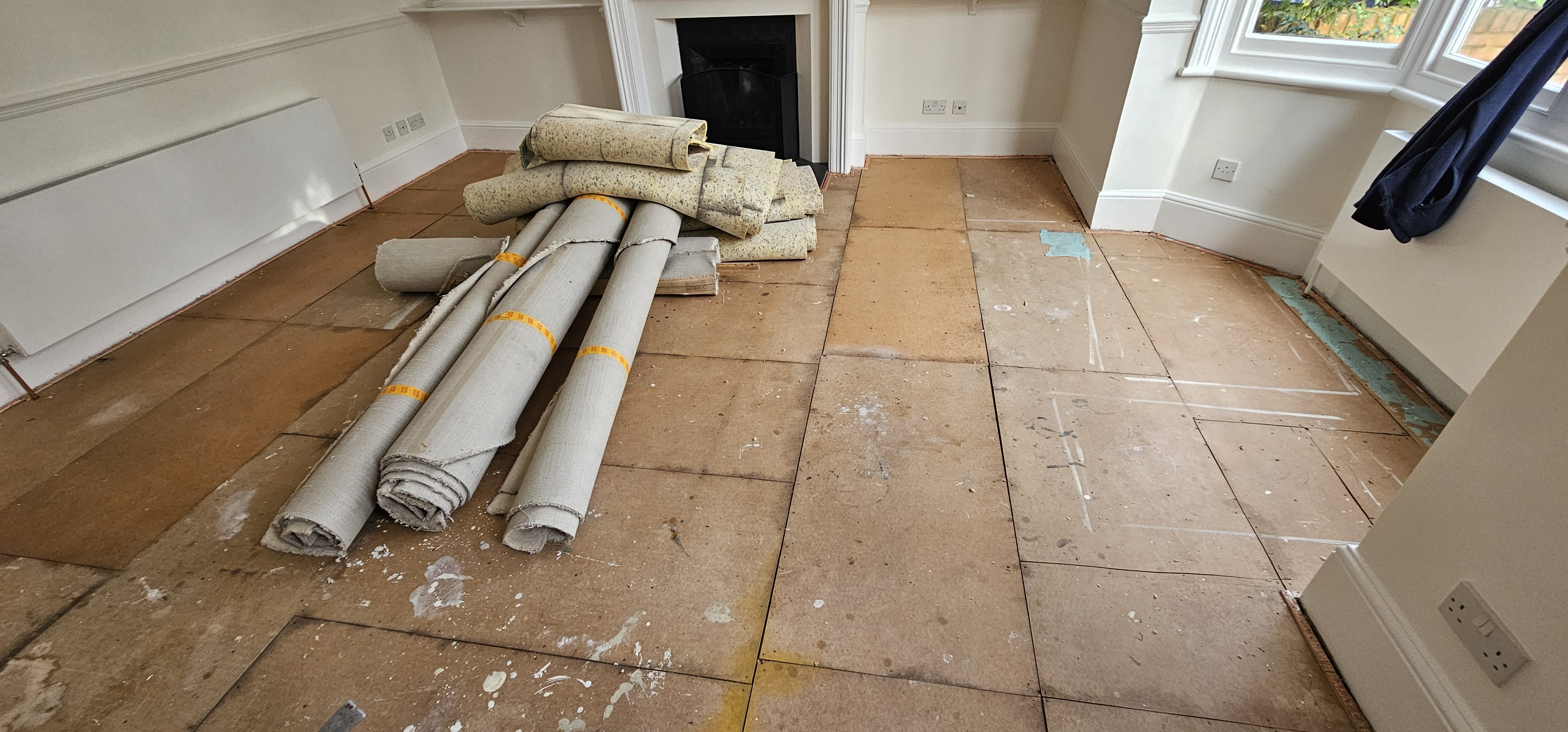
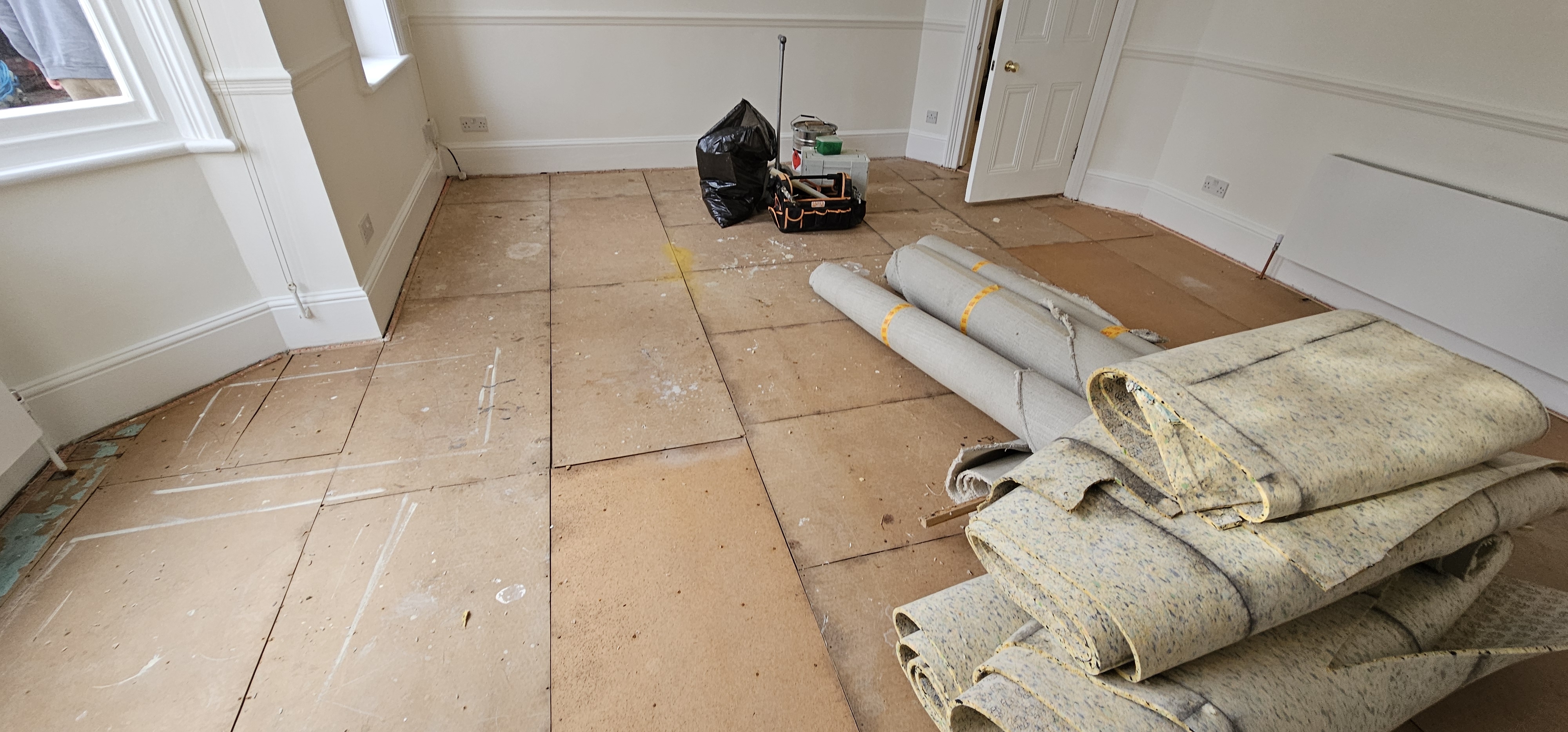
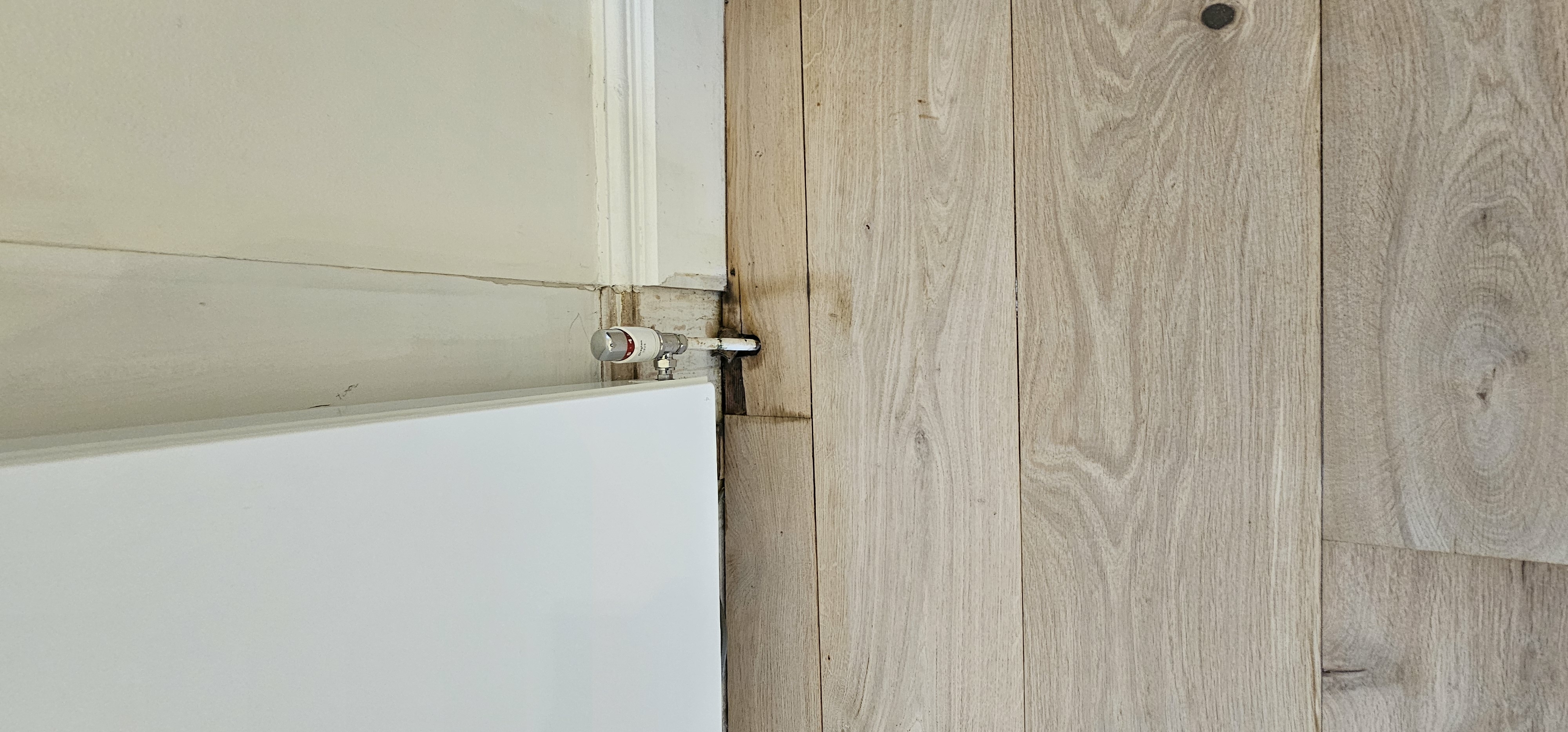
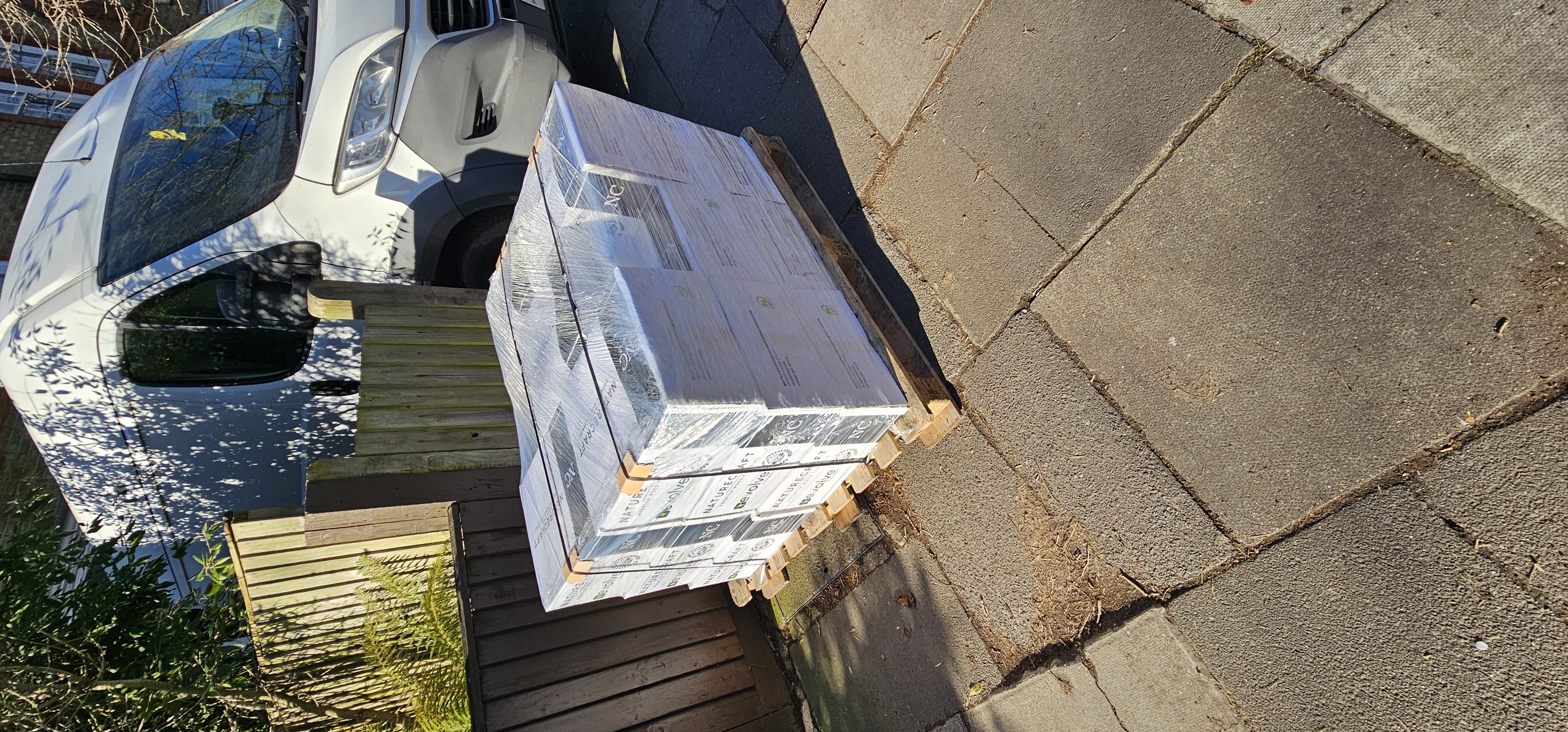
We recently completed a comprehensive sanding project on engineered wood flooring in a Victorian terrace in Barnet. The homeowner wanted to restore their original wooden floors to their former condition after years of wear and carpet coverage. The work involved careful preparation, multi-stage sanding, and finishing to bring out the natural grain and colour of the wood.
Work carried out
- Surface inspection and assessment of floor condition
- Dust containment setup throughout the property
- Coarse grit sanding to remove old finishes and surface damage
- Medium and fine grit sanding for smooth finish
- Edge sanding in corners and tight spaces
- Vacuum and tack cleaning between stages
- Application of protective sealant
About the project
The property had solid engineered wood throughout the ground floor, approximately 65 square metres. The boards showed significant scratching and dull patches where furniture had sat for decades. In some areas, the old lacquer finish had worn through completely, exposing bare wood that had begun to darken with age and dust accumulation. The homeowner had recently removed fitted carpets and wanted the floors restored without replacing them.
Our approach began with a thorough inspection to identify any problem areas. A few boards had minor cupping, which we noted but could address during the sanding process as moisture content had stabilised since the carpet removal. We used a three stage sanding process: starting with 36 grit to cut through the old finish and surface damage, progressing to 80 grit for intermediate smoothing, and finishing with 120 grit to prepare the surface for sealing. We contained dust throughout using temporary plastic sheeting and HEPA filtration equipment, which meant the rest of the house remained clean. After the final sanding stage and thorough cleaning with a tack cloth, we applied two coats of hard wearing polyurethane sealant, allowing proper drying time between coats.
About our Barnet service
Barnet is home to a mix of property types, and we work regularly on floors across Victorian terraces, Edwardian semi detached homes, and more modern properties built from the 1960s onwards. Many Victorian and Edwardian properties in the area still have their original hardwood or engineered wood floors, though these are often hidden beneath carpet or other coverings. When owners discover what lies beneath, restoration rather than replacement is usually the preferred route, both for preserving character and for practical cost reasons.
The properties we service in Barnet typically feature solid pine boards, traditional parquet, or later engineered wood installations. Older properties often have narrower boards with varied planing marks that add character but require careful sanding to avoid over cutting. We're familiar with the specific challenges of North London properties, including older subfloors that need careful handling and the presence of underfloor pipes and cables in Victorian terraces that must be located before work begins. Dust management is particularly important in semi-detached and terraced properties where neighbours are close by, and we take care to minimise any inconvenience.
Frequently asked questions
How much does wood floor sanding cost?
Sanding costs typically range from £25 to £45 per square metre depending on the floor condition and existing finish. A heavily damaged floor with multiple layers of old lacquer costs more than a floor in relatively good condition. Our survey visit allows us to give you a fixed price based on the actual state of your floor.
How long does the sanding process take?
For a typical domestic property, sanding takes between two and four days depending on the area size and floor condition. A 65 square metre project like the Barnet job normally takes three days. You can't walk on the floor for 24 hours after the final sealant application, and we recommend allowing at least 48 hours before moving furniture back.
Is the dust containment system really effective?
Yes. We use industrial HEPA filtration and temporary plastic barriers to isolate the work area. This means dust doesn't travel into other rooms or neighbouring properties. The room being sanded will have some dust in the air during work, but filtration removes the majority. Once finished, a thorough vacuum and wipe down leaves the space clean.